Showing posts with label nhl draft. Show all posts

Sunday, June 24, 2012

Quick 2012 Ranger Draft Recap


Gordie Clark, Glen Sather and the rest of the Ranger brass went to Pittsburgh and came away with four Future Blue.

Last year Sather swapped his sixth rounder from this draft for Nashville's sixth rounder in that one and this time around he made two more moves with the Preds for picks. He got a third round pick for next year and a fifth round pick in this draft for this year's third rounder and a fifth next summer. Got all that?

While it is highly unlikely we will see any of the kids that were called in Consol for the next two, three seasons, let's take a lil' look at 'em anyways:

Brady Skjei - 1st round, 28th overall - You can never have enough defensemen, right? Especially ones that are favourably compared to Ryan McDonagh... Skjei is headed for Minnesota, where he will hopefully take the next step towards becoming a NHL defenseman. Keith Ballard, Paul Martin, Alex Goligoski, Erik Johnson, and Stu Bickel all played at Mariucci Arena since the millennium, showing how the Golden Gophers program can produce capable defenders.

Cristoval “Boo” Nieves - 2nd round, 59th overall - As Matt mentioned in the preview, Boo dominated the draft combine so he should be able to handle Camp Tortorella (should the coach still be around when the kid comes out of Michigan). While it will be a while before be becomes a Ranger, Nieves will grace the Garden ice this year when he skates for the Wolverines against Cornell on November 24th. Red Berenson is a former Ranger and a brilliant coach who bequeathed us Ortmeyer and Hagelin so there is cause for faith. Matt, an avowed UofM fan, offered more: "The one knock on him is he's too much of a perimeter player at times, Red will work on that though. His hands are silky smooth, Rangers have not had a prospect with the stick-handling control that Boo possess."

Calle Andersson - 4th round, 119th overall - Reports about Andersson read like he is a right-handed, Swedish version of Skjei - good skating, good size, good vision - just with more of an offensive edge. His dad was a fourth round Ranger pick himself but if Andersson he can follow another Calle's career path - former Cap Johansson - we'll have one workable defender in a few seasons.

Thomas Spelling - 5th round, 142nd overall - The Danish winger did quite well playing against men in his home country's highest league last season. Spelling helped the Herning Blue Fox to the title with four goals and seven assists in the seven-game championship series against Odense, including a goal and two assists in a 4-0 Game 7 victory. While the natural scorer is from the same hometown as Peter Regin and Frans Nielsen (BOOO), he likely won't be facing them for a while - Spelling will spend this season helping Rogle in the club's return to the Elitserien. He is listed at 6'1, 165 so he definitely needs to bulk up if he is to make the leap over the pond eventually.

Surprisingly Clark and company didn't select a single goaltender yet again, which is a bit of a cause for concern. Chad Johnson and Martin Biron are both UFAs and Cam Talbot is a RFO. That leaves Hank, Scott Stajcer and Jason Missiaen - not exactly organizational depth. Stajcer put up personal-best save percentage despite being a backup in the OHL and Missiaen did well as Greenville's starter (ECHL), but both of them are years away from the show. That position will have to be addressed by Sather soon - perhaps by signing camp-invitee Troy Grosenick - but that is a post for another time.


 A Closer Look at the 2012 Ranger Draft Recap: The Quest for Future Stars


The National Hockey League (NHL) Draft is an annual event that offers teams the opportunity to build for the future by selecting talented young players. The 2012 NHL Draft was a pivotal moment for the New York Rangers, as they aimed to bolster their roster with promising prospects. In this article, we will provide a comprehensive recap of the Rangers' draft selections in 2012, analyze the impact of these picks, and address frequently asked questions (FAQs) regarding this crucial draft year.

Section 1: The Rangers' Draft Strategy in 2012

The 2012 NHL Draft presented the Rangers with the chance to add talent and depth to their organization:

Picking 28th Overall: The Rangers held the 28th overall pick in the first round, which meant they had to be strategic in their selection.

Building for the Future: With the goal of fortifying their roster for years to come, the Rangers aimed to identify young players with high ceilings.

Scouting and Analysis: The Rangers' scouting team conducted thorough research and evaluations to identify potential draftees.

Section 2: The Rangers' Draft Selections in 2012

Let's take a closer look at the players selected by the Rangers in the 2012 NHL Draft:

Brady Skjei (1st Round, 28th Overall):

Position: Defenseman
Analysis: Skjei emerged as a steady defenseman known for his skating and defensive acumen. He became a valuable part of the Rangers' blue line.
Cristoval "Boo" Nieves (2nd Round, 59th Overall):

Position: Forward
Analysis: Nieves, a skilled center, brought offensive flair to the organization. He developed in the Rangers' system and later made his NHL debut.
Calle Andersson (4th Round, 119th Overall):

Position: Defenseman
Analysis: Andersson, a Swedish defenseman, had potential but faced challenges in transitioning to North American hockey.
Thomas Spelling (5th Round, 142nd Overall):

Position: Forward
Analysis: Spelling, a Danish forward, faced an uphill battle to secure an NHL spot and continued to develop in European leagues.
Sami Noreau (5th Round, 136th Overall):

Position: Defenseman
Analysis: Noreau provided depth on defense, but his journey to the NHL took him through various minor leagues.
Section 3: The Impact of the 2012 Draft Class

The impact of a draft class takes time to materialize, and players develop at different rates:

Brady Skjei: Skjei emerged as one of the Rangers' top defensemen, showcasing his skills on both ends of the ice.

Cristoval Nieves: Nieves made his mark as a reliable center, contributing to the team's depth and versatility.

Calle Andersson: Andersson faced challenges adapting to the North American game and ultimately continued his career overseas.

Thomas Spelling: Spelling's development path led him to European leagues, where he continued to hone his skills.

Sami Noreau: Noreau contributed to the Rangers' minor league affiliates, providing defensive depth.

Section 4: Frequently Asked Questions (FAQs) - The 2012 Rangers Draft Class

Let's address some common questions about the Rangers' draft selections in 2012:

Did any players from the 2012 draft class become NHL stars?
Brady Skjei from the 2012 draft class developed into a notable NHL defenseman.

How long does it typically take for draftees to reach the NHL?
The timeline for NHL readiness varies for each player. Some may make their debut relatively quickly, while others require more development time.

What factors contribute to a successful draft class?
A successful draft class is often defined by the quality of players selected and their ability to contribute to the team's success over time.

Section 5: Lessons from the 2012 Draft

The 2012 NHL Draft serves as a reminder of the unpredictability of player development:

Patience is Key: Developing young talent takes time, and some players may require more seasoning in lower leagues before making an impact in the NHL.

Scouting Expertise: A successful draft hinges on the scouting department's ability to identify talent and potential in prospects.

Long-Term Vision: Drafting players is an investment in the future, and teams must balance immediate needs with long-term goals.


The 2012 NHL Draft was a critical moment for the New York Rangers as they aimed to secure talent for the future. While not every player from that class made a significant impact in the NHL, the draft served as a building block for the organization. Brady Skjei, in particular, emerged as a valuable asset to the Rangers' blue line. The draft class of 2012 exemplifies the challenges and rewards of player development in the NHL and reinforces the importance of patience, scouting, and long-term planning in building a successful team.


Thursday, June 21, 2012

Preppin' For Some Pickin'


by Matt Lavanco

Scotty Hockey Note: This was due to run on the NY Rangers Blog but seeing as Kev called it quits for now, I offered to put it up. Matt is a friend of the blog and a diehard Ranger fan with an appreciation of the amateur game. Some good stuff.

The draft is a day away and it is my favorite event of the offseason. I do not claim to be a pro scout – I simply enjoy amateur hockey and looking at players that might help the Rangers for years to come. One of the main things I like to consider is who may be a good fit with the current make-up of the Rangers squad. Unfortunately where the Rangers pick at 28th, the odds of selecting a dynamic offensive scorer or an elite puck-moving defenseman are slim. Additionally the Rangers are organizationally thin when it comes to goaltending prospects. But, with only four draft picks in seven rounds, I don’t feel it’s appropriate for the Blueshirts to use a first round selection on a goalie.

So if a 30-goal scorer or a power play quarterback are not within reach, I think Gordie Clark and company could certainly look to add some toughness to their lineup. The Rangers were pushed around, knocked off the puck and just flat outworked along the boards all too many times during the playoffs. Right off the bat, or the puck drop, there are two potential draftees with familiar last names that play a tough, physical game that could contribute to the top-9 set of forwards.

First off, Stefan Matteau (Matteau! Matteau!) is a hard-nosed kind of player who is not afraid to go into the dirty areas and is a physically strong kid for his age. Matteau spent last season with the U.S. National Team Development Program, where he played all three forward positions. He has the skills to contribute offensively but would be better suited on a checking line. He has backed out of a commitment to play at the University of North Dakota and will head to the QMJHL next season to skate for Blainville-Boisbriand, where the elder Matteau is working as assistant coach.

And secondly Henrik Samuelsson has travelled a fair amount over the last 18 months. Ulfie's boy was playing with Matteau and the USNTDP until he followed his dad to MoDo in Sweden. After being dropped to MoDo's junior club, Samuelsson returned to North America to join 2011 Rangers 4th round selection Michael St. Croix on the WHL's Edmonton Oil Kings. Samuelsson jumped onto the Oil Kings' second line and contributed right away with 10 points in his first 8 games. At 6'3 young Henrik is a big body in front of the net and has a mean streak not unlike his pops. Samuelsson might have raised his draft stock with 14 points in the playoffs, which doesn’t include the five points he put up in four Memorial Cup games.

After toughness, the other glaring weakness that really lasted the length of the Rangers season was faceoffs. The team lost too many draws all over the ice, especially in their own defensive zone. Colton Sissons is a player I think would help with depth down the middle. Sissons plays a smart two-way game, is a quality faceoff man and has an NHL-caliber shot. Sissons served as the captain for the Kelowna Rockets (Gordie Clark loves character!) and finished third on the team in scoring despite a concussion-shortened season. He was able to return in time for the playoffs and by all indications has had a full recovery.

Should the team decide to shore up the blueline, there are two defensive draftees that project in the final third of the first round that interest me. The first is Dalton Thrower. Thrower has a particular snarl to his game that a team can never have enough of and he is unafraid of all physical aspects of the game. True to his surname, Thrower is ready and willing to fight to defend his teammates. His offensive skills might be underrated as well, as he is more than capable of chipping in offensively. The second defenseman is another USNTDP product in Brady Skjei. Skjei plays a solid well-rounded game, but his skating is what really sets him apart as he is one of the better skating defenseman available. At 6’3, Skjei has good size and played top-pair minutes for the gold medal winning Under-18 U.S. team.

If the Rangers do look at a goaltender – Malcolm Subban, Andrei Vasilevski and Oscar Dansk are at the top of this year’s goalie class. Subban is the most athletically gifted of the three and has worked hard in the OHL this past season to round out all areas of his game. Vasilevski is the most technically sound but his status playing in Russia might scare off some teams. Dansk is a big-bodied Swedish goaltender that plays somewhat deep in his net and is known for his intense focus. Sounds familiar doesn’t it? Now I’m not saying he’s as good as our beloved Hank, they just have some similar qualities. It’s hard to say if any of the three will be available in the second round, and it's even harder to determine if any are worth a first round pick.

Other options for second round and beyond include: Derek Stepan's cousin Zach. Zach is a two-way center that is starting to get some attention, is coming into his own both offensively and defensively. He does not project to be as offensively talented as Derek but would certainly be an asset. Cristoval "Boo" Nieves, a Michigan Wolverine-commit, would also be worth a look. Nieves has slick hands and a solid 6'2 frame to grow into that he has used last few years playing prep school puck in Connecticut. He also dominated the draft combine finishing in the top-10 in most fitness categories. Defensively, Shayne Gostisbehere is a name worth knowing (and knowing how to spell). Gostisbehere is a true puck-moving defenseman who played quality minutes as a freshman for the Union College Dutchmen. He showed real poise down the stretch for Union and was one of the better defenseman in the entire NCAA tournament.

These drafts are always impossible to predict as one never really knows who will be selected or when. Personally though, I like Colton Sissons. I think he does a lot of the little things that are needed for a team to be successful and most importantly could help this team in the face-off circle. I also think Boo Nieves could be a solid pick-up in the second round as his ceiling is still rising.

Whoever the Rangers draft, they certainly will be well scouted. Gordie Clark and staff have certainly done a good job the past few years and we are beginning to see the returns of their labor at the NHL level with Stepan, Hagelin and Kreider. Here’s to Mr. Clark and co. surprising us with a player we can get excited about and look forward to pulling on that blue sweater.


 Preppin' For Some Pickin': A Guide to Antique Collecting


Antique collecting is a fascinating hobby that allows enthusiasts to explore history, culture, and craftsmanship through the lens of treasured objects from the past. Whether you're a seasoned collector or just starting out, the world of antiquing offers a wealth of opportunities to discover unique pieces that tell stories of bygone eras. In this article, we will delve into the exciting world of antique collecting, provide valuable tips for preppin' for some pickin', and address frequently asked questions (FAQs) to help you embark on this enriching journey.

Section 1: The Allure of Antique Collecting

Antique collecting has a timeless appeal:

Historical Connection: Antiques offer a tangible connection to history, allowing collectors to touch and experience the past.

Unique Aesthetics: Antique pieces often feature exquisite craftsmanship, intricate details, and design elements that are no longer common in contemporary objects.

Diverse Categories: Antique collecting spans a wide range of categories, including furniture, art, jewelry, ceramics, textiles, and more, catering to diverse interests.

Section 2: Getting Started with Antique Collecting

If you're new to antique collecting, here are some essential steps to get started:

Research: Begin by researching different types of antiques and their historical significance. Understand the specific periods, styles, and materials that interest you.

Visit Antique Shops: Explore local antique shops, flea markets, and estate sales to get a feel for the market and see a variety of items.

Learn from Experts: Attend antique shows and exhibitions to learn from experts and meet fellow collectors who can provide valuable insights.

Set a Budget: Determine your budget for collecting and stick to it. Antiques can vary greatly in price, so it's essential to set limits.

Section 3: Tips for Antique Collecting

Here are some tips to enhance your antique collecting journey:

Condition is Key: Examine items closely for signs of wear, damage, or restoration. The condition significantly affects an antique's value.

Provenance: If possible, trace the history and ownership of an antique. Items with well-documented provenance can be more valuable.

Authenticity: Be cautious of reproductions and forgeries. Seek the guidance of experts or reference books to verify authenticity.

Storage and Preservation: Properly store and care for your antiques to ensure their longevity. Protect them from sunlight, moisture, and temperature fluctuations.

Section 4: Frequently Asked Questions (FAQs) - Antique Collecting

Let's address some common questions about antique collecting:

What makes an item an antique?
Typically, an item is considered an antique if it is at least 100 years old. However, some categories, like automobiles, have different criteria.

How do I determine the value of an antique?
The value of an antique depends on factors such as rarity, condition, age, provenance, and current market demand. Consulting appraisers and reference guides can help.

Is antique collecting a good investment?
While some antiques can appreciate in value over time, collecting should primarily be driven by passion and appreciation rather than the expectation of financial gain.

Section 5: Exploring Different Antique Categories

Antique collecting encompasses a wide range of categories, each with its own unique charm:

Furniture: Antique furniture includes pieces from various periods and styles, such as Victorian, Art Deco, and Mid-Century Modern.

Art: Collecting antique art involves acquiring paintings, sculptures, and decorative art objects that span centuries of artistic expression.

Jewelry: Antique jewelry showcases exquisite craftsmanship and historical significance, with pieces ranging from Georgian to Art Nouveau.

Ceramics and Glassware: Antique ceramics and glassware encompass pottery, porcelain, glass, and crystal pieces, often featuring intricate patterns and designs.

Section 6: Building a Collection and Finding Treasures

As you delve deeper into antique collecting, consider these strategies:

Focus on a Theme: Build a collection around a specific theme or category that resonates with you, whether it's vintage watches, antique books, or fine china.

Networking: Connect with fellow collectors, attend auctions, and participate in online forums to expand your knowledge and find rare treasures.

Travel: Explore antique shops and markets in different regions or countries to uncover unique pieces with regional significance.


Antique collecting is a rewarding journey filled with historical exploration, aesthetic appreciation, and the thrill of discovery. Whether you're drawn to the elegance of antique furniture, the beauty of vintage jewelry, or the allure of centuries-old art, the world of antiques offers a diverse and captivating landscape to explore. As you preppin' for some pickin', remember that antique collecting is about more than just acquiring objects; it's about preserving history and connecting with the craftsmanship and stories of generations past. So, embark on your adventure, explore the world of antiques, and let the joy of collecting guide your path.


Saturday, June 25, 2011

Quick 2011 Ranger Draft Recap


Gordie Clark, Glen Sather and the rest of the Ranger brass went to Minnesota and came away with six more Future Blue. Yes, six. Sather swung a deal with St. Louis to get the Blues third round pick; he had to give up Evgeni Grachev, but given how often Grachev himself gave up on the ice, it is no big loss. And he swapped next year's sixth rounder with Nashville's this year.

While it is highly unlikely we will see any of the kids in the next two, three seasons, let's look at 'em anyways:

JT Miller - 1st round, 15th overall - It was a classy move by the Rangers to have Aaron Boogaard announce the selection, it was just disappointing that it was this kid. The Hockey News ranked him 59th just two months ago and there were several other players on his own team that would have been better selections - big Tyler Biggs, bible-thumping sparkplug scorer Rocco Grimaldi or goalie John Gibson. Miller committed to play at the University of North Dakota next year but doesn't plan on being there for long, which is not something you really should admit ahead of time. He is just another grinding north-south player with third line upside, a decent second or solid third but first? Perhaps after the Jessiman embarrassment the organization just wants to make sure their guy makes it to the NHL, no matter the role.

Steven Fogarty - 3rd round, 72nd overall - Grachev was a third round pick in 2008 and he brought us back a third round pick in 2011 - that's actually pretty good considering how inconsistent his play was in the AHL. Let's hope Seven Fogarty is steadier down the line. Fogarty looks pretty good in this video but it was against high school kids in Minnesota, so who knows? Looks like he has that Datsyukian timing and sneakiness to steal the puck and the ice sight to do good things with it.

Michael St. Croix - 4th round, 106th overall - A WHL scorer with flash but little grit but he will stand up for his teammates. St. Croix put up points on a bad Edmonton team and helped them to the playoffs. Unfortunately he disappeared once the postseason started, getting just one goal and no assists as the Oil Kings were swept by Ryan Nugent-Hopkins and the Red Deer Rebels.

Shane McColgan - 5th round, 134th overall - While he is willing to stand up for himself, McColgan is a skill guy first and foremost. A background in roller hockey (I like him already) has given him great hands and he has the speed to make them work in the new NHL. Kelly at Behind The Net spoke to him earlier this month after he had a good showing in the WHL playoffs.

Samuel Noreau - 5th round, 136th overall - After drafting a small skill guy in McColgan, they flipped the coin and took a dreadnought two picks later. Noreau is a defensive defenseman who has a tendency to lose his gloves and beat people up. He sounds like a McIlrath-kind of player without the upside.

Peter Ceresnak - 6th round, 172nd overall - Just the fifth Slovak selected in the draft, Ceresnak is several seasons away from the NHL, if at all. The boys at Copper & Blue did their due diligence and took at look at him thinking he could end up in Edmonton. They saw Jan Hejda in him but he sounds more like Radek Martinek to me, without the stink of Islander all over him.

Surprisingly Clark didn't select a single goaltender with any of the six picks to fill the one true hole in the organization. Tortorella doesn't trust Chad Johnson, the Whale relied on journeyman Dov Grumet-Morris even after Cam Talbot got healthy and Scott Stajcer couldn't seize the starting job on Owen Sound. But apparently Sather was convinced by Benoit Allaire that free agent signing Jason Missiaen is enough to supplement those three disappointments. Let's hope they can turn things around and that the injury bug doesn't strike again.


 A Quick Look Back: The New York Rangers' 2011 Draft Recap


The NHL Draft is a pivotal event for teams to bolster their rosters with promising young talent. In 2011, the New York Rangers had their sights set on building a brighter future, and the draft was a crucial step in that direction. This article delves into the Rangers' 2011 NHL Draft, providing a comprehensive recap of their selections, the impact those players had on the franchise, and how their careers unfolded.

Table of Contents

Introduction: The Importance of the NHL Draft

Setting the Stage for the Rangers in 2011
The 2011 NHL Draft

A Quick Overview of the Draft Class
Round 1: J.T. Miller (15th Overall)

Early Expectations and Miller's Journey
Round 3: Steven Fogarty (72nd Overall)

Developing in the Rangers' System
Round 3: Michael St. Croix (106th Overall)

The Path to the Pros
Round 4: Kenny Agostino (140th Overall)

From the Draft to the NHL
Round 5: Shane McColgan (134th Overall)

Challenges Along the Way
Round 6: Samuel Noreau (136th Overall)

The Defensive Prospect
Round 7: Peter Ceresnak (166th Overall)

A Late-Round Gem?
The Impact on the Rangers

How These Picks Shaped the Team
Looking Back: Hits and Misses

Evaluating the Draft Class
: The Ongoing Journey

The Ever-Evolving World of NHL Prospects
1. Introduction: The Importance of the NHL Draft

Setting the Stage for the Rangers in 2011

The NHL Draft is the gateway to a brighter future for NHL franchises, and the 2011 edition was no exception for the New York Rangers.

2. The 2011 NHL Draft

A Quick Overview of the Draft Class

This section provides a brief overview of the talent available in the 2011 NHL Draft.

3. Round 1: J.T. Miller (15th Overall)

Early Expectations and Miller's Journey

J.T. Miller was the Rangers' first-round pick in 2011. We'll explore his early days in the organization and his development.

4. Round 3: Steven Fogarty (72nd Overall)

Developing in the Rangers' System

Steven Fogarty, a third-round pick, embarked on a journey through the Rangers' farm system.

5. Round 3: Michael St. Croix (106th Overall)

The Path to the Pros

Michael St. Croix was another third-round pick with aspirations of making it to the NHL.

6. Round 4: Kenny Agostino (140th Overall)

From the Draft to the NHL

Kenny Agostino, a fourth-round pick, faced his own unique challenges on his path to the NHL.

7. Round 5: Shane McColgan (134th Overall)

Challenges Along the Way

Shane McColgan's journey, as a fifth-round pick, wasn't without its obstacles.

8. Round 6: Samuel Noreau (136th Overall)

The Defensive Prospect

Samuel Noreau, a sixth-round selection, added a defensive element to the draft class.

9. Round 7: Peter Ceresnak (166th Overall)

A Late-Round Gem?

Peter Ceresnak, chosen in the seventh round, aimed to prove that late-round picks could make a significant impact.

10. The Impact on the Rangers

How These Picks Shaped the Team

This section explores the contributions made by these draft selections to the Rangers' roster.

11. Looking Back: Hits and Misses

Evaluating the Draft Class

In hindsight, how successful were the Rangers' picks from the 2011 NHL Draft?

12. Conclusion: The Ongoing Journey

The Ever-Evolving World of NHL Prospects

The article concludes by reflecting on the ongoing journey of NHL prospects and the ever-changing landscape of professional hockey.

Frequently Asked Questions (FAQs)

Q1: Did any of the Rangers' 2011 draft picks become stars in the NHL?

A1: While not all of them reached star status, some players from the 2011 draft class did establish themselves as solid NHL contributors.

Q2: How do the Rangers' 2011 draft picks compare to those from other years?

A2: The success of a draft class can vary widely, and comparing it to other years is an interesting aspect of evaluating draft history.

Q3: What was the Rangers' overall performance during the years these players were in the organization?

A3: The Rangers' overall performance during the years when these players were in the organization played a role in their development and opportunities.

Q4: How do these players' careers look now, in retrospect?

A4: Retrospect offers valuable insights into the twists and turns of NHL careers, showcasing the unpredictable nature of professional sports.

Q5: What can we learn from the Rangers' 2011 draft experience for future drafts?

A5: Analyzing past drafts can provide lessons for future decision-making and player development strategies.


Friday, June 24, 2011

Scotty's Selection?

The first round of the NHL draft, as you are surely aware, is tonight in Minnesota. Because the Rangers made it to the playoffs but flamed out in the first round, they select 15th overall. They dealt away their second round picks to Calgary for Tim Erixon and sent their third rounder to Florida in the McCabe deal. That leaves them with 104th in the fourth, 134th and 136th in the fifth (134 was part of the Erixon deal).

Things worked out that my selection for the Rangers matched that of Gordie Clark and we got Dylan McIlrath. I was lucky enough to have seen McIlrath play but did not make it to any junior games this year so it is far harder to judge. Jess from Prospect Park, the blogging guru when it comes to the Ranger kids, presented a few options and likes Finland's Joel Armia at 15 or American Tyler Biggs if the Rangers trade down in the first round. Personally I am hoping they do deal away the 15 pick and drop, because they can get back a third rounder to be sure - maybe a second if the other team is desperate. If there is a way to trade it and get back a top-six player, well, I do that in a second.

Strange to say, right? After years of begging for a rebuild with youth it is finally here. We have a young core with another wave of kids about to come through. We need to ride that wave and quickly. Those kids need to enter a culture of winning - not mediocrity - where they can succeed before they go sign somewhere else or need to be dealt away in this salary cap world. If we needed a reminder of that, well Philly just gave us one.

The Rangers clearly are building a team that will be successful when the renovations are finished in MSG, to justify the extraordinary prices. Given the parity in the draft picks after the top six or seven this year, would a project kid be able to not just play but to succeed in two seasons time?

Twenty years ago the Rangers picked Alex Kovalev 15th overall. Since then the Rangers drafted one player who turned out worthy of the title 'First Round Pick" - Marc Staal. That is, of course discounting MDZ, Kreider and McIlrath as the jury is still out on them. A few guys made it to the league and became worthwhile players - Sundstrom, Cloutier, Malhotra - and a few didn't - Cherneski, Brendl, Jessiman. One would like to imagine that Clark has set the team back on the path of regularly drafting guy who can make the shot but who knows?

However, since it isn't fun not to have a horse in the race, if I had to throw some darts at the wall and guess at who the Rangers will pick - I'd like Mark McNeill if he is still around, Nicklas Jensen, David Musil or even goalie John Gibson. As long as Sather doesn't make an awful trade and Clark does select a netminder at some point, the 2011 draft will be successful for the team.


 Scotty's Selection: Analyzing the Impact of Key Roster Choices


In the fast-paced world of professional sports, roster selections are critical decisions that can shape the fate of a team's season. In this article, we delve into the intriguing selections made by a team's general manager, often referred to as "Scotty," and analyze the potential impact of these choices. We will explore the criteria behind Scotty's selection, the players involved, and the implications for the team's performance.

Table of Contents

Introduction: The Crucial Role of Roster Selections

Setting the Stage for Roster Decisions
Scotty: The Architect of the Team

Introducing the Decision-Maker
The Selection Process: Art and Science

Unveiling the Criteria Behind the Choices
Player A: The Established Star

Analyzing the First Notable Selection
Player B: The Rising Talent

Breaking Down the Second Key Selection
Implications for Team Dynamics

How Scotty's Choices Impact Team Chemistry
Fan Reactions: Cheers and Jeers

Exploring the Reactions of the Team's Supporters
Coach's Perspective: A Game Plan Adjusted

How the Coach Adapts to the New Roster
Performance Expectations: High Stakes Ahead

What the Team Aims to Achieve with Scotty's Selection
: The Unfolding Story

Summing Up the Anticipation Surrounding the Season
1. Introduction: The Crucial Role of Roster Selections

Setting the Stage for Roster Decisions

Roster selections are pivotal moments in any sports team's journey, with far-reaching consequences for the season ahead. In this article, we delve into the captivating world of Scotty's selections, exploring the decision-making process, the players involved, and the potential outcomes.

2. Scotty: The Architect of the Team

Introducing the Decision-Maker

We introduce "Scotty," the team's general manager, whose role is to make key roster decisions that will define the team's composition for the upcoming season.

3. The Selection Process: Art and Science

Unveiling the Criteria Behind the Choices

This section explores the intricate balance of art and science that goes into Scotty's selection process. What factors influence his choices, and how does he prioritize the team's needs?

4. Player A: The Established Star

Analyzing the First Notable Selection

We dissect the first significant player selected by Scotty, examining the player's track record, strengths, and how he fits into the team's strategy.

5. Player B: The Rising Talent

Breaking Down the Second Key Selection

The second player chosen by Scotty is a rising talent. We analyze this selection, exploring the player's potential and the role he may play on the team.

6. Implications for Team Dynamics

How Scotty's Choices Impact Team Chemistry

Roster selections can have a profound impact on team dynamics and chemistry. We delve into how Scotty's choices may influence the relationships and cohesion within the squad.

7. Fan Reactions: Cheers and Jeers

Exploring the Reactions of the Team's Supporters

Fans are the lifeblood of any sports team. We investigate how the team's supporters are reacting to Scotty's selections, including both excitement and skepticism.

8. Coach's Perspective: A Game Plan Adjusted

How the Coach Adapts to the New Roster

The team's head coach plays a crucial role in implementing Scotty's selections on the ice. We look at how the coach is adjusting the game plan to maximize the potential of the new roster.

9. Performance Expectations: High Stakes Ahead

What the Team Aims to Achieve with Scotty's Selection

With the season on the horizon, expectations are running high. We explore what the team aims to achieve with the newly selected roster and the stakes involved.

10. Conclusion: The Unfolding Story

Summing Up the Anticipation Surrounding the Season

In conclusion, we summarize the anticipation and excitement surrounding the team as they prepare to embark on a new season with Scotty's selections at the forefront of their journey.

Frequently Asked Questions (FAQs)

Q1: Who is "Scotty" in the context of this article?

A1: "Scotty" represents the general manager or decision-maker of a sports team responsible for selecting and shaping the team's roster.

Q2: What criteria are typically considered in roster selections?

A2: Roster selections consider various factors, including player performance, skills, team needs, and the overall strategy for the upcoming season.

Q3: How do fan reactions impact the team's dynamics?

A3: Fan reactions can influence team morale and atmosphere, with enthusiastic support providing a boost and skepticism adding pressure.

Q4: What role does the coach play in roster selections?

A4: While coaches do not typically make roster decisions, they work closely with the general manager to develop strategies that leverage the selected players' strengths.

Q5: What are the stakes involved in a sports season with key roster selections?

A5: The stakes in a sports season with significant roster selections are high, as teams aim for success, playoffs, and championship titles, making each decision critical to their goals.


Sunday, June 27, 2010

Draft Day No. 2, 2010

Jess at Prospect Park spends a lot of time watching junior hockey so, as always I recommend you take a look at his take of the day. Funny thing though, he asks for us to have faith and then goes on to rip three of the five guys drafted and point out the folly of the Bobby Sanguinetti deal.

That being said, the Blueshirts claim they wanted old school Canadian grit and frankly that is exactly what they got. Whether it is what will help the franchise in the long term, well we'll have to see, won't we?

If you haven't seen or read we drafted:
Name Round Overall 2009-10 Team Pos. Ht. Wt. Born Birthplace
Dylan McIlrath 1 10 Moose Jaw (WHL) D 6’4” 212 4/20/92 Winnipeg, MB
Christian Thomas 2 40 Oshawa (OHL) RW 5’9” 162 5/26/92 Toronto, ON
Andrew Yogan 4 100 Erie (OHL) C/LW 6’3” 205 12/4/91 Coconut Creek, FL
Jason Wilson 5 130 Owen Sound (OHL) LW 6’2” 205 4/15/90 Richmond Hill, ON
Jesper Fasth 6 157 HV 71 Jr. (SWE-Jr.) RW 5’11” 165 12/2/91 Nassjo, Sweden
Randy McNaught 7 190 Saskatoon (WHL) RW 6’4” 222 8/5/90 Nanaimo, BC
And we dealt Bobby's World to Carolina for the sixth round pick which we spent on that Swedish nobody and for a second rounder next year. The writing has been on the wall for Bobby when the team drafted MDZ and signed Matt Gilroy. The poor kid got a guest spot on Broadway but was banished right back to Hartford after five quick games. It is pathetic when you think about the Rangers dealing the 21st overall pick in '06 away for a second and a sixth. Claude Giroux was picked 22nd, do you think the Flyers would trade him away for that right about now? Glen Sather has made so many solid trades over the last year that it is hard to get too pissed.

No, seriously.

It is in his signings that he has doomed the team to mediocrity so let's accept what happened in L.A. as something to (possibly) dread another day and start focusing on next Thursday. Will Marc Staal hit the market? It's possible. Will Shelley? Will Glen overpay for Frolov?

See! There are plenty of worse things to worry about right now than draft picks and with good ole Glen you know something is going to happen, it is just a matter of what ...


 Revisiting Draft Day No. 2, 2010: A Look Back at the NHL's Next Generation


The NHL Draft is a pivotal moment in the career of young hockey prospects. It's a time when dreams are realized, futures are shaped, and the next generation of hockey talent is ushered into the league. In this article, we'll take a retrospective journey back to Draft Day No. 2, 2010, and explore the impact of the players selected that day. We'll also answer frequently asked questions about the NHL Draft and its significance.

Draft Day No. 2, 2010 - Setting the Stage

The 2010 NHL Entry Draft, held in Los Angeles, California, marked the second day of selections, where Rounds 2 through 7 took place. The first round had already introduced notable names like Taylor Hall, Tyler Seguin, and Ryan Johansen. The second day of the draft would unearth a wealth of talent that would go on to shape the NHL landscape.

Key Players Selected on Day 2, 2010:

Jamie Benn (Dallas Stars - 5th Round, 129th Overall): One of the most significant steals in draft history, Jamie Benn, was selected by the Dallas Stars in the fifth round. He would go on to become the team's captain and a franchise cornerstone, winning the Art Ross Trophy as the league's leading scorer in 2015.

Justin Faulk (Carolina Hurricanes - 2nd Round, 37th Overall): Justin Faulk's selection by the Carolina Hurricanes in the second round proved to be a wise choice. Faulk has had a successful career as a top-pairing defenseman and an NHL All-Star.

Torey Krug (Boston Bruins - Undrafted): While not selected in the draft, Torey Krug signed with the Boston Bruins shortly after as an undrafted free agent. He would go on to be a key offensive defenseman for the Bruins and a prominent power-play contributor.

Freddie Andersen (Carolina Hurricanes - 7th Round, 187th Overall): The Anaheim Ducks drafted Freddie Andersen in the seventh round, and he later became the starting goaltender for the Toronto Maple Leafs, earning several playoff berths.

John Klingberg (Dallas Stars - 5th Round, 131st Overall): The Dallas Stars found another gem in the fifth round with John Klingberg. He emerged as one of the NHL's premier offensive defensemen, earning multiple All-Star selections.

Frequently Asked Questions (FAQs):

1. How does the NHL Draft work?

The NHL Draft is an annual event where teams select eligible players to join the league. The draft order is determined by the previous season's standings, with the team finishing last having the first overall pick.

2. Can drafted players choose not to sign with the team that selected them?

Yes, drafted players have the option to sign with the team that selected them or return to the draft in a subsequent year. This decision typically hinges on contract negotiations and the player's development goals.

3. Are there any late-round draft success stories in the NHL?

Yes, there have been numerous late-round draft success stories in the NHL, with players like Pavel Datsyuk (171st overall), Henrik Lundqvist (205th overall), and Mark Stone (178th overall) making significant impacts.

*4. How long does it take for a drafted player to make it to the NHL?

The time it takes for a drafted player to reach the NHL varies. Some players make their debut shortly after being drafted, while others may spend several years developing in junior leagues or the AHL before earning a spot in the NHL.

*5. What is the significance of a franchise cornerstone player?

A franchise cornerstone player is one who plays a pivotal role in a team's success over an extended period. They are often team captains or leaders, and their contributions go beyond statistics, influencing team culture and performance.


Draft Day No. 2, 2010, was a pivotal moment in the NHL's history, where several future stars were unearthed. Players like Jamie Benn, Justin Faulk, Torey Krug, Freddie Andersen, and John Klingberg have not only had impressive careers but have also significantly impacted their respective teams.

The NHL Draft is a reminder that talent can emerge from unexpected places and that the league is a dynamic, evolving ecosystem. It's a celebration of young athletes realizing their dreams and a testament to the scouts, coaches, and organizations that identify and nurture these talents. As the NHL continues to evolve, Draft Days like No. 2, 2010, serve as a source of inspiration and excitement for fans, as they witness the next generation of hockey stars take their first steps on the path to greatness.


Friday, June 25, 2010

What A Way To Spend A Friday


Billed as a Ranger Draft Party, the Friday night get-together at the Hills was more of a 'cram Ranger fans into a hot hipster lounge where they will drink and wait to be disappointed.'

And disappointed they were. As well as dismayed, angered and utterly baffled.

Three things were lustily booed: Gary Bettman, the Islanders draft table and Glen Sather. Sather garnered the loudest boos ... and that was before the Gordie Clark announced the selection of Moose Jaw's Dylan McIlrath 10th overall.

Afterwards, well, there was a whole lotta shock, some quizzical looks and then some head shaking. Oh, and me laughing my ass off in the back. The Ranger braintrust and I apparently were on the same train of thought as they selected the same player I picked for the team ... just waaaaaaaaaaaaaaaaaaaay earlier than I would have. They clearly decided to draft for a need rather than picking the best player available and were afraid that that player would be gone quickly. Considering how wacked out the round was after the top few picks, perhaps they were right.

But we will never know.

The Rangers added a big and mean defenseman who, should he improve his skating, could provide a perfect compliment to the skill of Michael Del Zotto. Ryan McDonagh would not have been the partner that McIlrath can be. McDonagh is a strong, solid two-way defender who hopefully will head to Broadway and be a good Blueshirt for a long, long time. But McIlrath could be the Beukeboom to MDZ's Leetch.

When Beuk was out there, Leetchie could freelance all he liked because there was a rock behind him. Should the puck come back the other way, Beuk was the big body to stuff the zone and intimidate the opposition from crashing the slot in numbers. He bought time for the team to backcheck and used his physicality to keep players from getting any rebounds Richter would give up. Trust the goaltender to make the first save, and either clear the puck yourself or keep the bad guys from getting it.

Yes McIlrath at 10 was a huge stretch but it possibly filled a void that desperately needed filling. Plenty of skill was left on the board and there are plenty of holes left to fill but that will be what Saturday is for. So relax for now and know that the franchise is stronger. Is it as strong as it could have been? Well, history will decide that. No use getting angry over a failure that hasn't happened yet and (hopefully) may never occur.


 What a Way to Spend a Friday: Exploring the Perfect Weekend Experience


Fridays hold a special place in our hearts. They mark the end of the workweek and the beginning of the weekend – a time to relax, unwind, and make the most of our free time. In this article, we'll delve into the art of spending a perfect Friday, exploring various activities and tips to make the most of this cherished day. We'll also answer frequently asked questions about maximizing weekend enjoyment.

Morning Bliss: Start Your Day Right

The perfect Friday begins with a rejuvenating morning. Here's how to kick-start your day:

A Healthy Breakfast: Fuel your body with a nutritious breakfast. A balanced meal with proteins, grains, and fruits will provide you with the energy needed for the day ahead.

Morning Exercise: Consider a brisk walk, yoga, or a quick workout. Physical activity boosts endorphins and sets a positive tone for the day.

Mindfulness and Meditation: Spend a few minutes in mindfulness or meditation to clear your mind and focus on the present moment.

Exploration and Adventure: Embrace New Experiences

Fridays are the perfect opportunity to explore new activities and experiences:

Outdoor Adventures: Depending on your location, consider hiking, biking, or simply exploring a nearby park or nature reserve.

Cultural Exploration: Visit a museum, art gallery, or historical site. Immerse yourself in the richness of culture and history.

Culinary Adventures: Try a new restaurant or café, or experiment with a new recipe at home. Food can be a delightful adventure in itself.

Learning Opportunities: Enroll in a workshop, class, or seminar. Fridays provide a great opportunity to invest in personal growth.

Quality Time: Connect with Loved Ones

Spending time with loved ones is a wonderful way to make the most of your Friday:

Family Time: Plan a family outing, movie night, or a game session. These moments create lasting memories.

Friends and Social Gatherings: Meet up with friends for a coffee catch-up, happy hour, or a spontaneous adventure.

Date Night: For couples, Friday evenings are perfect for romantic dinners, movie nights, or stargazing together.

Relaxation and Rejuvenation: Find Inner Peace

Fridays are also an opportunity to unwind and find inner peace:

Read a Book: Get lost in the pages of a captivating book. Reading is a great way to escape into different worlds.

Spa and Self-Care: Treat yourself to a spa day, a bubble bath, or a skincare routine. Self-care is essential for mental and physical well-being.

Music and Art: Explore your creative side by listening to music, painting, or engaging in any artistic pursuit you enjoy.

Mindful Evening: Wind down with a mindfulness or relaxation session. Deep breathing exercises and gentle stretches can prepare you for a restful night's sleep.

FAQs - Making the Most of Your Friday

1. How can I make the most of my Friday if I have work or other commitments during the day?

If you have daytime commitments, consider planning a special activity or treat for the evening. It could be a dinner at your favorite restaurant, a movie night, or a relaxing bath to end the day on a positive note.

2. What if I prefer a low-key Friday without many activities?

That's perfectly fine! A low-key Friday can be equally enjoyable. You can spend it reading, watching your favorite shows, or simply resting and recharging for the weekend.

3. How can I make the most of my Friday on a budget?

Many enjoyable activities can be budget-friendly. Consider a picnic in the park, a DIY spa day at home, or a movie night with homemade popcorn.

4. What if I prefer to use my Friday for personal projects or hobbies?

Absolutely! Fridays can be an excellent time to work on personal projects or indulge in hobbies. It's a chance to focus on your passions and interests.

5. How do I balance relaxation and productivity on a Friday?

The key is to strike a balance that works for you. Allocate some time for relaxation and leisure activities, and also set aside time for any tasks or projects you want to accomplish. Planning your day can help you achieve this balance.


Fridays are a gift, a bridge between the demands of the workweek and the freedom of the weekend. How you choose to spend your Friday can greatly impact your overall well-being and happiness. Whether it's exploring new adventures, spending time with loved ones, finding inner peace, or simply embracing relaxation, the perfect Friday is a canvas on which you can paint your own masterpiece of joy and contentment. So, as the week draws to a close, savor the anticipation of that "Thank Goodness It's Friday" feeling, and make the most of your precious day.


Scotty's Selection?

As if you don't already know, tonight is the first round of the NHL Draft out in Los Angeles. Thanks to the mediocre season that they had and the near-miss of the playoffs, the Rangers have the 10th overall selection.

There are dozens of mock drafts out there, I'm not about to do one. As always, I turn towards Jess at Prospect Park when looking for scouting info and he recommends we take Emerson Etem, a former roller hockey player who had a Fotiu-esque travel schedule to get to training. Jess' first choice was the young Swiss sensation Nino Niederreiter but prevailing thought has him going before 10. If Etem is as dedicated to his craft and is as good as Jess has raved, I don't see why he would still be on the board but we will have to see.

Kitchener Rangers kid Jeff Skinner put up great numbers in the O last season but all accounts say his skating leaves much to be desired and he is a bit undersized. Vladimir Tarasenko may be a better all-around talent but, no matter what Dmitry says about Russians, given our track record I wouldn't waste the pick.

Instead, I would rather see the Rangers trade down. Let them get back a third round pick - they wasted theirs on Brian Boyle - and use a late first round selection on defenseman Dylan McIlrath. I saw McIlrath when I was out west and, as I was trying to root for the home teams in Seattle and Everett, instantly hated him. He was big, he was mean and he seemed dirty. Pretty much everything we need on our blueline. His skating is suspect, but so was Zdeno Chara's when he came into the league (and as a defender it is more forgiving a sin than up front like with Skinner). At best, McIlrath is another Jeff Beukeboom. Beuk sets a high bar so perhaps he could at least be a sane(r) version of Dale Purinton. At worst he is a bust, but there have been plenty of them over the last 20 years - and unlike back then there are actually good, young players in the system already.

Until Glen trades them away.


 Scotty's Selection: The Art and Science of Sports Talent Evaluation


In the world of sports, talent evaluation is a critical process that can make or break a team's success. One individual who has earned a reputation for exceptional talent evaluation is Scotty, a renowned sports analyst and talent scout. In this article, we will delve into the art and science of sports talent evaluation, explore Scotty's selection process, and address frequently asked questions about this crucial aspect of building winning teams.

Scotty's Expertise and Insight

Scotty's reputation as a trusted talent evaluator is well-earned. His ability to identify potential stars, uncover hidden gems, and predict player success has made him a go-to figure for sports teams and enthusiasts alike. Scotty's talent evaluation process typically includes the following key elements:

Scouting: Scotty and his team of scouts meticulously analyze players' performances, both in games and practice sessions. They assess various skills, such as athleticism, technical abilities, and game intelligence.

Statistics and Analytics: Scotty uses advanced statistical and analytical tools to gain insights into a player's performance. This includes tracking metrics like shooting accuracy, speed, and defensive efficiency.

Interviews and Character Assessment: Beyond physical skills, Scotty places great importance on a player's character and work ethic. He conducts interviews and talks to coaches, teammates, and references to gauge a player's personality and commitment.

Injury History: Evaluating a player's injury history is crucial. Scotty assesses the impact of past injuries on a player's current and future performance.

Market Value: Scotty considers a player's market value, taking into account factors like age, contract status, and the overall financial landscape of the league.

Team Needs: Understanding the needs of potential destination teams is essential. Scotty analyzes which teams are likely to pursue specific positions or skills to bolster their rosters.

The Role of Talent Evaluation in Sports

Talent evaluation is a cornerstone of team building in sports. It involves assessing the potential and performance of athletes to make informed decisions about player acquisition and development. Here are some key aspects of talent evaluation in sports:

Drafting and Recruitment: In leagues with drafts, talent evaluation plays a vital role in selecting the best prospects. Teams use scouting reports, statistics, and interviews to make their picks.

Player Development: Talent evaluation is an ongoing process. Teams continue to assess their players' progress and potential, providing tailored training and coaching to help them reach their peak performance.

Strategic Planning: Teams use talent evaluation to develop long-term strategies. For example, they may invest in young, promising players with the goal of building a championship team over several seasons.

Trading and Transfers: Talent evaluation is critical when making trades or transfers. Teams must assess the value of the players involved and determine how they fit into their overall strategy.

Frequently Asked Questions (FAQs)

1. How accurate are talent evaluations in predicting a player's success?

Talent evaluations are not foolproof, but they provide valuable insights. Success in sports can be influenced by various factors, including injuries, coaching, and teamwork. Talent evaluation helps minimize risks, but there are no guarantees.

2. Can players outperform their talent evaluations?

Yes, some players exceed their initial talent evaluations. This can happen due to hard work, determination, and the right coaching and support.

3. Do talent evaluators consider intangibles like leadership and teamwork?

Yes, intangibles like leadership, teamwork, and character are essential considerations in talent evaluation. These qualities can significantly impact a player's success and their ability to contribute to a team's culture.

*4. How do talent evaluators account for the mental aspect of sports?

Mental toughness, focus, and decision-making are crucial in sports. Talent evaluators often assess a player's mental attributes through interviews, observations, and discussions with coaches and teammates.

*5. Can talent evaluators predict a player's longevity in a sport?

Talent evaluators consider a player's injury history and overall physical condition when assessing longevity. However, predicting longevity with absolute certainty is challenging.


Talent evaluation is both an art and a science in the world of sports. It requires a deep understanding of the game, a keen eye for potential, and the ability to assess both physical and intangible attributes. Scotty's selection process exemplifies the dedication and precision required to identify and nurture talent in sports.

As teams and athletes strive for excellence, the role of talent evaluation remains pivotal. It shapes the trajectory of careers, influences team strategies, and ultimately impacts the competitive landscape of sports. While talent evaluation is not infallible, it remains an indispensable tool for those seeking to build successful sports teams and maximize their chances of achieving greatness in the world of sports.


Friday, June 18, 2010

Russian Ranger Draft Picks


With Gordie Clark telling all of the beat writers that he thinks quite highly of Vladimir Tarasenko as a possible selection next week at the NHL Draft, I figured I would go through the Rangers' history of Russian draft picks. I think I covered pretty much every one and ran it through Russian hockey writer Dmitry Chesnokov of Puck Daddy/Sovetsky Sport just to be sure I got things right. As with picks from any country, it is a mixed bag at best. Of the 29 players, 20 have yet to play in the NHL and only five (of the other nine) have played more than six games for the Rangers.

1982
7th round, 141st overall: Sergei Kapustin (LW): At 29 years old, Kapustin was in the prime of his career but never made it to North America. A shame, as he was a true winner with the USSR dynasty of the 70s.

1989
10th round, 202nd overall: Roman Oksiuta (RW): Had not made it to North America before he was traded to Edmonton in 1992 as part of the Kevin Lowe deal.

1990
5th Round, 85th overall: Sergei Zubov (D):Perhaps the most underrated Ranger ever, Zubov averaged nearly a point per game over his time on Broadway before being unceremoniously dealt with Petr Nedved to Pittsburgh for over-the-hill Luc Robitaille and Ulf Samuelsson. After going on to win a second Cup with Dallas in '99, Zubov left the NHL in 2009 and racked up 42 points in 53 games over the KHL last season. He played 1,232 NHL games including playoffs - over a 1,000 of them after leaving the Rangers (1,035 to be precise).

12th round, 244th overall: Sergei Nemchinov (C): Sarge was a rock solid center who could be counted on defensively while adding a little bit of offense. He lasted nearly six seasons on Broadway before going to Vancouver with Brian Noonan for Esa Tikkanen's second Ranger stint and Russ Courtnall.

1991
1st round, 15th overall: Alexei Kovalev (LW): Speaking of two stints, Kovalev played 536 games in all as a Ranger tantalizing and frustrating us fans. Kovy was the first-ever Russian selected in the first round of the NHL draft and he showed why with stellar play in 1994. Eventually, however, his inconsistency sent him packing. Twice. The second being one of Sather's worse trades, dealing him for Josef Balej and a second round pick (that never panned out). He is still playing and pissing off fans, just up in Ottawa.

9th round, 191st overall: Vjateslav Uvaev (G): Uvaev never made it to North America, spending most of his career in Russia before a span in Italy.

11th round, 235th overall: Vitali Chinakhov (C): Never a big point scorer, Chinakhov spent his career in Russia.

1992
5th round, 120th overall: Dimitri Starostenko (W): Two seasons after Starostenko was drafted, he came to the States and gave the NHL a shot. He never made it. The Belarussian (close enough) spent parts of three seasons in Binghamton - and 11 ECHL games (where he had nine goals and two assists) - before giving up and going home. Having lived there, I don't blame him.

10th round, 240th overall: Vladimir Vorobiev (W): When I was in Binghamton I covered Vlad, and saw firsthand his size and ability. At 6'3. 200, Vorobiev had a nice package of skills and some good hands. He just didn't have that x-factor, the push to make himself great. He would get to the show - 31 games over two seasons with the Rangers - but was eventually dealt to Edmonton for Kevin Brown (who?). Vlad was still playing in Russia last year.

1993
3rd round, 61st overall: Maxim Galanov (D): Another guy I would later see in Binghamton, Galanov spent three seasons in the A. He got a six game stint in the show, which was enough for Pittsburgh to decide they wanted him when the Rangers put him on waivers; he went on to play 122 games in the NHL in all and is still playing in Russia. Galanov had good size and skated well but wasn't gritty enough

4th round, 86th overall: Sergei Olumpijev (C): Six-foot-four, 220 pound winger was drafted and came to North America to play in the O. After two seasons of juniors, he started on a minor league career that saw him play on seven teams in four leagues over five seasons. I had to have seen him when he was with Muskegon of the UHL but don't remember; I do recall seeing him with the RHI Sacramento River Rats, where he had just 19 points in 27 games (by comparison his teammate Gerry St. Cyr had 89 points in just one more game).

7th round, 162nd overall: Sergei Kondrashkin (RW): Never came to North America and was out of hockey five seasons after being drafted.

10th round, 242nd overall: Andrei Kudinov (C): Like Starostenko, Kudinov came over to play in Binghamton for a few seasons before going home. He scored 76 points for the baby Rangers in 155 games but, back in Russia would play his final season alongside Oksiuta of all people (kinda interesting coincidence).

11th round, 261st overall: Pavel Komarov (D): Komarov played four games over three seasons for the Binghamton Rangers. The only mention I could find of him with the Blueshirts was getting cut during training camp one season. Judging by his numbers, he was a defensive defenseman who wasn't a fighter but took a lot of bad penalties.

11th round, 268th overall: Maxim Smelnitski (C): Like the last five Russian Ranger draft picks, Smelinitski came over, saw Binghamton and left for home. His tenure was the shortest - just one game.

1994
4th round, 100th overall: Alexander Korobolin (D): At 6'4, 225 you had to think he had some grit but he managed to make it through 21 games in Hartford before running home to Russia. He had one point (a goal!) and 22 PIM.

6th round, 135th overall: Yuri Litvinov (C): Litvinov never played on this side of the world and didn't play much on the other side either; he managed just 133 games over six seasons in Russia before quitting.

9th round, 209th overall: Vitali Yeremeyev (G): Ok, he is really from Kazakhstan but I had to include him. Yeremeyev was the first pick of the 9th round; following him in the same round were Tim Thomas, Johan Hedberg, Evgeni Nabokov, Tomas Vokoun and John Grahame. Yeah. Four games as a Ranger, four losses. He returned to Russia after that and became a cult hero for Dynamo Moscow fans (according to Dmitry, himself a diehard Dynamo fan). Yeremeyev won the championship in 2005 alongside some guy named Ovechkin and is still playing at a good level - 16-11-2, 2.37 and .920 last season for the 10th place team.

1995
5th round, 110th overall: Alexei Vasiliev (D): Like Yeremeyev, Vasiliev is still contributing in the KHL. Before going back there, he played 171 games for the Wolf Pack and helped Hartford win the Calder Cup in 2000. Unfortunately he didn't show he could help the big boys, going pointless with one minor penalty in his one game on Broadway.

8th round, 195th overall: Ilja Gorohov (D): Gorohov played one game here in America, and it was with the Las Vegas Thunder in 96-97. The defenseman returned to Russia and has steadily played there ever since. He played last season with Salavat alongside Vorobiev, Max Kondratiev and Dmitri Kalinin (as well as other familiars NHL renegade Alex Radulov, Viktor Kozlov and Oleg Tverdovsky).

1995
3rd round, 76th overall: Dmitry Subbotin (F): A career Russian-leaguer, Subbotin never came to play for the Rangers or their affiliates and was actually selected off our roster by Columbus in the 2000 expansion draft. He didn't play for them either.

1999
8th round, 226th overall: Evgeny Gusakov (LW): Gusakov is a curious case. He showed up to camp in '99, showed off his massive frame (6'6, 210 lbs) and was promptly sent to Baie-Comeau of the QMJHL. He had a decent time (53 points in 67 games) and would get one scoreless game in Hartford before the end of the season. Gusakov went back to the Q the next season, had 31 points in 32 games and then essentially fell off the map. He went to Belarus in 2001 and played 44 games, then managed 15 games over the next two seasons in Russia. Injuries maybe?

9th round, 254th overall: Alexei Bulatov (LW): Bulatov was on the '99 training camp roster as well but I guess he didn't like it here and the team had no qualms with letting him go home afterwards. He played 21 games for three different teams that season in Russia.

2001
2nd round, 40th overall: Fedor Tyutin (D): Oh Toots. Dealt to Columbus for flash-with-no-substance Nik Zherdev, Tyutin was a strong defensive player and he complimented Dan Girardi well. He actually hit players around the Ranger net and was smart on both sides of the ice. And Glen, in his wisdom, replaced the youngster with Kalinin a day later. Ugh.

8th round, 230th overall: Leonid Zhvachkin (D): Selected right after Aaron Voros of all people, Zhvatchkin went to training camp and was assigned to Hartford but never played in the A. He ended up with Guelph in the OHL alongside Tyutin. Where Toots was gone the next season, Zhvachkin or Zvachkin or Zhvachin (depending on where you look) stayed another year, was traded and went home in the offseason not to return to North America.

2006
2nd round, 54th overall: Artem Anisimov (C): It is fair to say that the jury is still out. After pathetically tepid play for much of this season, Anisimov found his game with Prust and Shelley during the stretch run. Arty said he felt more comfortable on the ice with them there, so of course John Tortorella has already said he will break up that line this fall.

2007
1st round, 17th overall: Alexei Cherepanov (RW): RIP. Cherry dropped down the draft board for some reason and everyone was happy to see a Jagr replacement. But whether it was heart problems (myocarditis) that killed him or alleged steroids, we'll never know if he would have come over here to play and if he would have been any good.

2008
3rd round, 75th overall: Evgeny Grachev (C): After being hailed as another big Russian who will swoop in and save us, Grachev made the jump to the AHL last season and was underwhelming by all accounts. He managed 28 points in 80 games and was accused of disappearing many nights. Whether we chalk it up to a transition season or his true colours has yet to be seen.

2009
7th round, 200th overall: Mikhail Pashnin (D): Pashnin was also drafted first overall by CSKA Moscow and went on to collect five points in 44 games with them. He is signed through next season but will come to the summer prospect camp and the Rangers are still quite high on him.

2010
????


 "Russian Ranger Draft Picks: Unveiling the Talent Pipeline from Russia to New York"


The New York Rangers, one of the NHL's most iconic franchises, have a rich history of drafting and developing talent from around the world. Over the years, Russian players have made a significant impact on the team's success. In this article, we will take a closer look at some of the Russian Ranger draft picks, their contributions to the team, and answer frequently asked questions about the role of Russian talent in the NHL.

Russian Rangers: A Storied History

The New York Rangers have a long-standing tradition of scouting and drafting talent from Russia. Russian players have not only contributed to the team's success but have also left a lasting mark on the NHL as a whole. Let's explore the journeys of a few notable Russian Rangers:

1. Sergei Zubov (1989 NHL Draft): Sergei Zubov was selected by the Rangers in the fifth round of the 1989 NHL Draft. He went on to become one of the most influential Russian defensemen in NHL history. During his time with the Rangers, Zubov showcased exceptional offensive skills, recording 89 points in the 1993-94 season, when the Rangers won the Stanley Cup.

2. Alexei Kovalev (1991 NHL Draft): Alexei Kovalev, a first-round pick by the Rangers in 1991, was known for his electrifying playmaking abilities. His skill and creativity on the ice made him a fan favorite in New York. Kovalev played a crucial role in the Rangers' Stanley Cup victory in 1994.

3. Pavel Buchnevich (2013 NHL Draft): Pavel Buchnevich, drafted by the Rangers in 2013, represented a new generation of Russian talent. His blend of speed, scoring ability, and physical play made him a valuable asset to the team. Buchnevich's development in New York highlighted the ongoing success of Russian scouting efforts.

4. Igor Shesterkin (2014 NHL Draft): Igor Shesterkin, the Rangers' standout goaltender, was selected in the fourth round of the 2014 NHL Draft. He quickly became a rising star in the NHL with his outstanding goaltending skills. Shesterkin's arrival in New York brought hope to Rangers fans and reinforced the team's commitment to developing Russian talent.

The Impact of Russian Players in the NHL

Russian players have played a significant role in shaping the landscape of the NHL. Their contributions extend beyond individual success to impact the league's overall competitiveness. Here are some key points to consider:

Skill and Creativity: Russian players are often celebrated for their skill, creativity, and playmaking abilities. They bring a unique style of play that adds excitement to the NHL.

Goaltending Excellence: Russian goaltenders, like Igor Shesterkin, have demonstrated exceptional skills between the pipes. They have become a force to be reckoned with, further diversifying the league's talent pool.

Global Fanbase: Russian players have garnered a global following, expanding the NHL's fanbase and international appeal. Their presence helps bridge cultures and unite hockey enthusiasts worldwide.

Championing Diversity: The success of Russian players in the NHL promotes diversity and inclusivity in the sport. It encourages young talents from various backgrounds to pursue their dreams of playing in the league.

FAQs on Russian Talent in the NHL

1. Are Russian players more likely to be drafted as forwards or defensemen?

Russian players are drafted in various positions, including forwards, defensemen, and goaltenders. The choice of position depends on the player's skills and the team's needs.

2. How do Russian players adapt to the North American style of play?

Russian players often undergo a transition period to adapt to the NHL's physical and faster-paced style of play. Many spend time in the AHL or junior leagues to acclimate before joining the NHL.

3. What challenges do Russian players face when coming to North America?

Language and cultural differences can pose initial challenges for Russian players. They must also adjust to the smaller NHL rink size and the North American lifestyle.

4. What role does scouting play in identifying Russian talent?

Scouting is crucial in identifying Russian talent. NHL teams invest in extensive scouting networks to evaluate players in Russia and other international leagues. Relationships with Russian hockey organizations are also important.

5. How has the NHL benefited from the influx of Russian talent?

The NHL has benefited from the influx of Russian talent by becoming a more diverse and competitive league. Russian players have contributed to the league's global appeal and enhanced the quality of play on the ice.


The New York Rangers' history of drafting and developing Russian talent is a testament to the global nature of the NHL. Russian players have not only left their mark on the Rangers but have enriched the league with their skill, creativity, and passion for the game. As the NHL continues to attract talent from around the world, the contributions of Russian players serve as a reminder of the sport's ability to unite fans and athletes across borders, making it a truly international phenomenon.


Wednesday, June 16, 2010

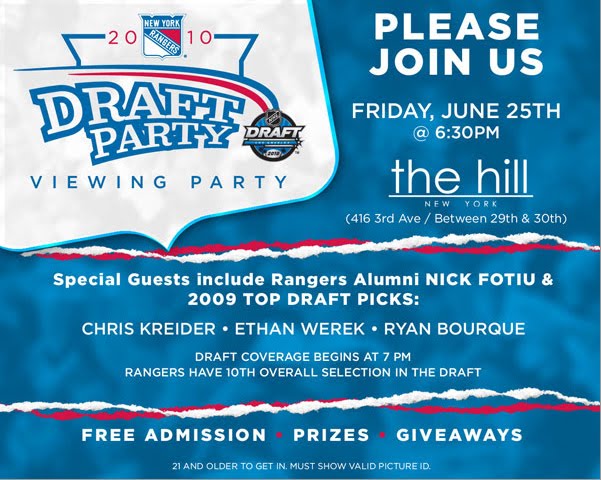
Draft Party 2010

Colour me surprised:

The last Ranger draft party I went to was inside the Garden on June 26th, 1999. Why do I remember so precisely? Because I was talking to Dan Cloutier when team officials came to take him away. He was pulled off the floor and informed that he had just been traded - along with Niklas Sundstrom, a 1st and a 3rd round pick - to Tampa Bay Lightning for their first round pick. Which the Rangers then promptly wasted on one-dimensional sniper/slacker Pavel Brendl. I stuck around until they drafted Jamie Lundmark ninth and left, pissed off and utterly disappointed.

Just in case you were wondering, the Rangers had nine more selections in the draft and not one of them played a single NHL game. Because it is fun to look at who we missed: Tim Connolly was picked right after Brendl, Barret Jackman was picked 17th, Nick Boynton 21st and Marty Havlat 26th. That draft also featured Douglas Murray (241st from Apple Core here in NY, geez), Henrik Zetterberg (210th), Martin Erat (191st), Ryan Malone (115th), Chris Kelly (94th), Mike Comrie (91st), Ryan Miller (138th), Craig Anderson (77th) and Stanley Cup runner-up Mike Leighton (165th, by Chicago of all teams). But no, this was not good ole Glen's mess up, this was Neil Smith's final draft as Ranger GM. No wonder he got canned.


 "A Night to Remember: The 2010 Draft Party and Its Lasting Impact"


Sports fans know that a draft party is not just an event; it's an experience. The excitement, anticipation, and camaraderie among fans create an atmosphere unlike any other. In 2010, the sports world witnessed a memorable draft party that left a lasting impact. In this article, we will take a trip down memory lane to explore the 2010 Draft Party and its significance. We will also address frequently asked questions about draft parties in sports.

The 2010 Draft Party: A Snapshot

The 2010 Draft Party was a momentous event that transcended the realm of sports. It was held in New York City, a city known for its vibrant sports culture and passionate fans. This particular draft party was centered around the NFL Draft, an annual event where teams select college players to join their ranks.

Key Highlights of the 2010 Draft Party:

Location: The 2010 Draft Party took place at Radio City Music Hall, an iconic venue that added an extra layer of grandeur to the event.

Fan Attendance: Thousands of fans from across the country flocked to Radio City Music Hall to witness the draft live. The energy in the venue was electric, with fans donning their team's jerseys and colors.

First-Round Drama: The first round of the 2010 NFL Draft was filled with suspense and surprises. Unexpected picks, trades, and player selections added an element of unpredictability that had fans on the edge of their seats.

Team Representations: Each NFL team had a designated area at the draft party where their fans gathered. These team-specific sections were filled with passionate supporters, creating a friendly rivalry throughout the evening.

Player Reactions: The reactions of players as they were selected ranged from jubilation to tears of joy. The emotional rollercoaster experienced by these young athletes added a human touch to the draft process.

The Lasting Impact

The 2010 Draft Party was not just about the players selected or the trades made; it was about the shared experience of sports fandom. Here are some ways in which this draft party left a lasting impact:

Fan Engagement: The event highlighted the power of fan engagement. It showcased the unbridled passion of sports fans and their dedication to supporting their teams.

Shared Memories: Fans who attended the 2010 Draft Party still cherish the memories of that night. It became a talking point and a source of nostalgia for years to come.

Community Building: Sports have a unique ability to bring people together. The draft party fostered a sense of community among fans, many of whom formed lasting friendships with fellow supporters.

Increased Popularity: The success of the 2010 Draft Party contributed to the growing popularity of NFL drafts and draft parties across the country. It set a precedent for future events.

Inspiration: For aspiring athletes, witnessing their peers fulfill their dreams at the draft party served as inspiration. It showed them that with hard work and determination, anything is possible.

FAQs About Draft Parties

1. What is the purpose of a draft party?

A draft party is a gathering of sports fans to watch and celebrate the selection of players by sports teams in various drafts. It allows fans to share the excitement of the event and support their favorite teams.

2. Are draft parties only for NFL drafts?

No, draft parties can be organized for drafts in various sports, including the NFL, NBA, NHL, MLB, and more. Any sport with a draft process can have a draft party.

*3. How can I attend a draft party?

To attend a draft party, you typically need to purchase tickets or secure an invitation if the event is exclusive. Many draft parties are open to the public and may be held at sports bars or venues.

*4. What happens at a draft party?

At a draft party, fans gather to watch the draft live on big screens, cheer for their team's picks, and enjoy food and drinks. It's a festive atmosphere with fan contests, team merchandise, and sometimes appearances by former players or team mascots.

*5. Do draft parties have an impact on the draft process?

Draft parties do not directly impact the draft process, as team selections are made independently. However, the energy and enthusiasm of fans can create a memorable atmosphere for the event.


The 2010 Draft Party was more than just a sports event; it was a celebration of passion, camaraderie, and the enduring love of sports. It reminded us that sports have the power to unite people from all walks of life in a shared experience of jubilation, heartbreak, and the pursuit of dreams. As fans continue to attend draft parties and create cherished memories, they pay homage to the spirit of sportsmanship and the timeless joy of being part of a community that transcends boundaries and lasts a lifetime.