Friday, February 22, 2013

8-6-2: Losing Leads

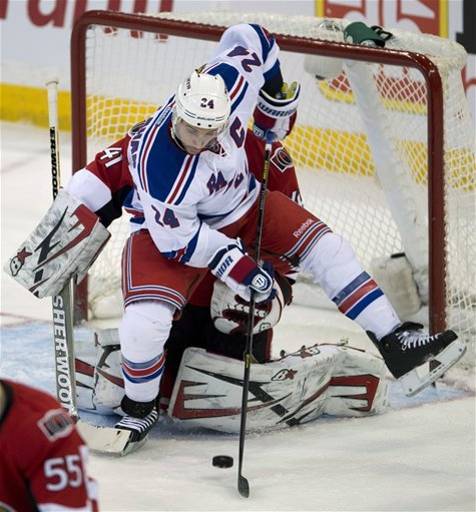
The Rangers continued their latest trend of snatching defeat from the jaws of victory on Thursday night by blowing a lead on their way to a 3-2 shootout loss to the Ottawa Senators.

The Blueshirts scored two goals in less than a minute of the third period to turn a 1-0 deficit into a 2-1 lead, but then they endeavoured to erase their own advantage. Over the next two minutes they iced the puck, gave up one-timers from the slot by Erik Condra and Stephane Da Costa, threw the puck into their own bench, let Chad Greening get an open shot, let Mika Zibanejad get a chance at the rebound, took a dumb penalty and then left Zibanejad alone for the one-timer that tied the game.

It was like a bad horror flick: we got to enjoy the cute coed taking her top off, but then had to watch as she proceeded through a comedy of errors that resulted in her inevitable, bloody doom. And, like the horror genre, it happens again and again and again. The Rangers inexplicably become complacent as soon as the score tilts in their favour, and it can't go on for much longer if they are to have a chance this season.

Changing metaphors, John Tortorella has a thing for dogs - quite fitting considering he is all bark but no bite - and it is on him to to turn this team of mercenary mutts into a pack of pit bulls that will bite down and not let go until June.

Late Hits:

*Speaking of mercenary mutts, Rick Nash and Arron Asham didn't bother to play. Given that neither one has visibly been injured this season and the team won't release any info, they leave a lot of cause to wonder what is keeping them off the ice. Could it be Tin Man syndrome?

*Was Brad Richard$ out too? Didn't see him.

*Looks like Marian Gaborik is going through the Jaromir Jagr lack of confidence in the shootout. It is tough watching someone so skilled give such half-hearted, uncreative efforts in the skill competition. Jagr started begging out of his opportunities to go, will Gabby soon do the same?

*Del Zastrous, simply Del Zastrous. Amid his nearly five minutes of power play time he turned the puck over for Silfverberg's goal and blew a wide open backhand. He missed the overtime with that alleged injury, and without him the team played their best hockey of the night. Coincidence? Hmmm.

*Chris Kreider is a young, skilled forward. His hard work earned two power plays and took out Ottawa's starting goaltender. So why did he only see 12 seconds of power play time and no shifts in overtime?

*Even though I attempt to avoid all blogs until this one is written, I saw some folks are blaming the stripes for  the loss because of two blown Blueshirt goals. The NHL officiating is a joke and has been butchering calls all season across the league, but they are equally inept and their errors aren't what are keeping the Rangers down.

*If it wasn't against us, it would have been great to celebrate Kaspars Daugavins game-winning goal. Latvians love their hockey so very much that it is wonderful to see one of their own succeeding. (Even if he may have simply mishandled the puck, rather than intentionally slipping it through Hank's legs.)

*What a shot by McDonagh to thread that puck into the Ottawa net for the go-ahead goal. Defensemen who can get pucks on goal from the point ... craziness.


*Marc Staal had a good night, but to see him trading punches postconcussion is nerve-racking.

*One of Super Jew Jeff Halpern's best performances this season. As mentioned before, he looked like he was one of the vets who was hurt by the lockout - now he is getting his legs back and getting going.

*Remember when the Rangers had someone to offset Chris Neil? What was that guy's name again? But seriously, Ottawa had a distinct edge in the physical game last night and that can't be allowed to happen to often.

*PHW Three Stars:
3-Henrik Lundqvist - 35 saves.
2-Jakob Silferberg - one regulation goal, one shootout goal.
1-Craig Anderson - 21 saves.

Scotty Hockey Three Stars:
3-Hank - The Sens kept him busy but he kept the Rangers in the game until they could take the lead, and then he helped them at least leave with the one point.
2-Ryan Callahan - So if you work the slot, good things happen? The team needs to learn from their captain's lead and battle down low. Plus he knew in the shootout to go around a thick-padded 6-foot-7 goaltender, rather than through him.
1-Silferberg - Any surprise that this young Swede knew how to solve Hank? Went gloveside twice, scored twice. Silferberg has a big future ahead of him and is in a prime position right now, learning alongside Daniel Alfredsson. Stud.


 8-6-2: The Tale of Losing Leads in Sports


In the world of sports, the thrill of competition often hinges on the unexpected and the dramatic. While victories are sweet and memorable, there is a flip side to the coin – the agony of losing leads. In this article, we delve into the phenomenon of teams that often find themselves in the unenviable position of losing leads, exploring the psychology, strategies, and the emotional rollercoaster that accompanies these situations.

I. The All-Too-Common Story

For sports fans, it's a storyline that plays out time and time again. A team, often with a significant lead, appears poised for victory, only to watch helplessly as their advantage slips away. Whether it's in the final quarter of a football game, the last inning of a baseball match, or the closing minutes of a basketball contest, losing leads is a universal experience in the world of sports.

II. The Psychology of Losing Leads

A. Complacency

One of the primary culprits behind losing leads is complacency. When a team builds a comfortable lead, players may subconsciously ease up on their efforts, thinking the game is already won. This complacency can lead to a lack of focus and a decrease in intensity, making it easier for the opposing team to mount a comeback.

B. Pressure

As a game progresses and the clock winds down, the pressure on the leading team intensifies. The fear of squandering a lead and facing defeat can be paralyzing, leading to mistakes and lapses in judgment. The psychological weight of maintaining a lead can have a profound impact on a team's performance.

C. Opponent's Determination

The trailing team, often fueled by the desire to prove themselves or stage a comeback, can become highly motivated. This determination can translate into a more aggressive and strategic approach, putting additional pressure on the team with the lead.

III. Strategies for Preventing Lead Loss

A. Maintain Aggressiveness

To prevent the onset of complacency, coaches often emphasize the importance of maintaining aggressiveness throughout the game, regardless of the score. This mindset encourages players to stay engaged and focused, reducing the likelihood of losing a lead.

B. Managing the Clock

In sports where a clock determines the game's duration, managing the clock becomes crucial when holding a lead. Teams with an advantage may employ tactics such as running down the clock, taking deliberate timeouts, and controlling possession to limit the opponent's opportunities.

C. Depth and Rotation

Having a deep and well-rotated roster can help prevent fatigue and maintain a high level of performance late in the game. A tired team is more prone to making mistakes and losing leads.

IV. The Emotional Rollercoaster

Losing a lead is not just a physical and strategic challenge; it's an emotional rollercoaster. Fans, players, and coaches alike experience a range of emotions as a lead slips away, from disbelief and frustration to despair and disappointment.

A. Fan Frustration

Sports fans invest emotionally in their teams, and watching a lead evaporate can be agonizing. The collective frustration of fans can impact the atmosphere in the stadium or arena, adding to the pressure on the players.

B. Player Despair

Players who were once riding the high of a lead can quickly find themselves in a state of despair as their advantage dwindles. Self-doubt and regret can creep in, further hampering their performance.

C. Coach's Dilemma

Coaches face a unique challenge when their team is losing a lead. They must make crucial decisions about strategy, substitutions, and timeouts, all while navigating the emotional turmoil of the moment.

V. Classic Examples of Lead Loss

A. Super Bowl LI (New England Patriots vs. Atlanta Falcons)

Super Bowl LI, played in 2017, is a prime example of a dramatic lead loss. The Atlanta Falcons built a 28-3 lead over the New England Patriots in the third quarter. However, the Patriots mounted an historic comeback, scoring 25 unanswered points and ultimately winning in overtime, 34-28. This game is a testament to the unpredictable nature of sports and the potential for lead losses, no matter how insurmountable a lead may seem.

B. 2016 NBA Finals (Cleveland Cavaliers vs. Golden State Warriors)

In the 2016 NBA Finals, the Golden State Warriors found themselves up 3-1 in the series against the Cleveland Cavaliers. They were leading Game 7 by four points with just over a minute left. However, the Cavaliers, led by LeBron James, made a late surge, tying the game and eventually winning the championship in a stunning turn of events. This loss remains a painful memory for the Warriors and their fans.

VI. The Road to Redemption

While losing leads can be disheartening, it can also serve as a source of motivation and learning. Teams that have experienced the agony of losing a lead often emerge stronger and more resilient, determined to avoid a repeat performance.

A. Learning from Mistakes

Coaches and players dissect games where leads were lost, analyzing what went wrong and how to prevent it in the future. These experiences serve as valuable lessons in sportsmanship, teamwork, and adaptability.

B. Mental Toughness

Experiencing the pressure of losing a lead can build mental toughness. Teams learn to stay composed in high-pressure situations and make critical decisions under stress.

C. Motivation for the Future

The pain of a lead loss can fuel a team's determination to succeed in future games and seasons. It becomes a driving force, pushing players to work harder and improve their performance.

VII. Frequently Asked Questions (FAQs)

Q: Are there statistics on how often teams lose leads in sports?
A: While there are no specific statistics on how often teams lose leads, it is a common occurrence in sports, and many games have been decided by dramatic comebacks.

Q: What strategies can fans use to cope with the frustration of watching their team lose a lead?
A: Coping strategies for fans include staying engaged and supportive, maintaining perspective, and understanding that sports can be unpredictable.

Q: Are there teams known for frequently losing leads?
A: Some teams have a reputation for struggling to maintain leads, but lead losses can happen to any team in any sport. It is part of the unpredictable nature of sports.


The phenomenon of losing leads in sports is a narrative as old as the games themselves. It is a testament to the unpredictable and dramatic nature of competition, where fortunes can change in an instant. For fans, players, and coaches alike, losing a lead is a rollercoaster of emotions, but it also offers valuable lessons and the opportunity for redemption. In the end, it's the resilience and determination to bounce back that define the true character of a team, and losing a lead is just one chapter in the ever-evolving story of sports.



Wednesday, February 20, 2013

8-6-1: Zzzzzzzzzzzzzz

Two teams stepped onto the MSG ice last night. One was playing on their home ice, carrying a 4-0-1 streak after a day off. The other had a 4-0 streak, playing less than 24 hours after a physical win in Carolina. Neither team played particularly well, but one appeared utterly exhausted and lifeless. Yep that one was the Rangers.

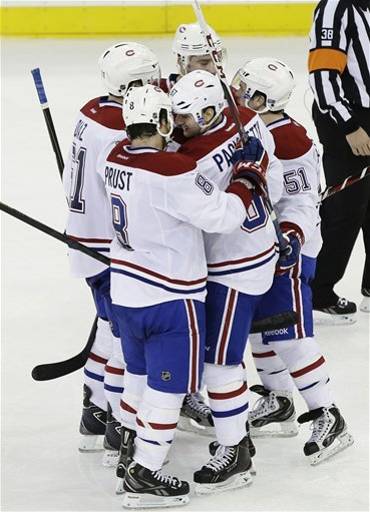
The Blueshirts sleepskated through one of the dullest affairs in recent history, a boring game largely devoid of displays of skill or physicality. For two Original Six teams, there was no sign of any rivalry in this one but - like the vast majority of their matches over the last 86 seasons - Montreal ended up on top. The Habs came from behind to beat the Hab-nots 3-1, helped by the one guy who played like he wanted to be there: Brandon Prust.

Pruster threw his body around, checking his former teammates and blocking their shots. He played at even strength, on the power play and (of course) shorthanded. And he had a big hand in the game-winning goal, making a brilliant backhanded pass across the slot to untouched rookie Alex Galchenyuk. It was a triumphant return for the former Ranger, as he showed his old team exactly what they were missing.

It is long past time to lament the loss of Sean Avery, who became persona non grata the second John Tortorella was mistakenly hired. The team went on without him and still had sparkplugs in Cally, Dubi, Fedotenko and Prust. Three of those four are now gone and their replacements on the roster could not get anything going last night. Pyatt was tightly checked, Miller was invisible and Asham was utterly ineffective (as per usual).

The Blueshirts have won most of their games this season because of their skill, not their grit - a reversal from last year. But when the Richard$ plays piss poorly, Gabby allows himself to be marginalized and Rick Nash doesn't even bother to show up, the grit guys have to pick up the slack and that did not happen. More of the current crew need to learn that "it's just pain" and play their hardest.

A few Late Hits:

*Maybe they should re-paint the red line green, because the Rangers concede passage into their own end every rush. Where is the forecheck?

*After being utterly delighted by a perfect power play goal on Sunday the man advantage regressed back to its utterly awful self. Normally a team down 2-1 in the third period that gets a power play would get a chance to tie things up. For the Rangers it only brought them two minutes closer to the final buzzer.

*Mentioned Pruster's pretty feed before but credit is due to Step's stellar set-up - he threaded the puck under the defenseman's stick right to Stralman for the slam dunk.

*The game-tying goal was thanks to Del Zaster. He allowed his man to get behind him and turned to watch the play. McD had to skate over to try to clear the Canadien from the crease and, timing being every thing, he screened Hank. DZ's utter lack of defensive ability strikes again.

*Boyle has come out of the gates strong the last two games but is still not a good hockey player. The majority of his hits don't achieve anything and he still avoids screening the goaltender.

*Had hoped to see more from Mashinter but he was shackled with Asham on his line so it is of little surprise he saw little ice time and was unable to do anything with it.

*PHW Three Stars:
3-Carl Hagelin - one assist.
2-Carey Price - 24 saves.
1-Alex Galchenyuk - one goal.

Scotty Hockey Three Stars:
3-Step - The kid is picking up some of the slack as Richard$ skates around collecting his paycheque.
2-Galchenyuk - Young American clearly has a bright future ahead of him.
1-Prust - He had a point to prove and he did just that. 


 8-6-1: Decoding the Art and Science of Sleep


In our fast-paced world, sleep is often overlooked, undervalued, or sacrificed in the pursuit of productivity and success. Yet, it is during those seemingly "inactive" hours of slumber that our bodies and minds perform essential maintenance and restoration. This article delves deep into the enigmatic realm of sleep, exploring the science behind it, its crucial role in our lives, and practical tips for achieving a good night's rest.

I. The 8-6-1 Phenomenon

The cryptic title "8-6-1" refers to the recommended number of hours of sleep for different age groups:

Eight Hours for Adults: It is widely suggested that adults aim for a minimum of eight hours of sleep per night to support physical health, cognitive function, and emotional well-being.

Six Hours for Adolescents: Adolescents, who are undergoing significant physical and mental development, require about six hours of sleep more than adults, ideally around nine hours.

One Hour for Infants: Newborns, on the other hand, need the most sleep, clocking in at around sixteen hours a day, with short periods of wakefulness for feeding and diaper changes.

The 8-6-1 framework serves as a general guideline, but individual sleep needs can vary. Factors such as genetics, lifestyle, and overall health can influence the ideal amount of sleep for a person.

II. The Science of Sleep

A. Sleep Cycles

Sleep is not a monolithic state but rather a series of cycles. Each sleep cycle typically lasts about 90 minutes and consists of four stages:

Stage 1 (Light Sleep): This is the transition between wakefulness and sleep. It's a brief phase where you may experience drifting thoughts and muscle twitches.

Stage 2 (True Sleep): In this stage, heart rate and body temperature decrease, preparing the body for deeper sleep. Brainwave activity begins to slow down.

Stage 3 (Deep Sleep): This is often referred to as slow-wave sleep. It's the stage where the body does most of its physical restoration, including muscle repair and immune system maintenance.

REM (Rapid Eye Movement) Sleep: REM sleep is where most vivid dreaming occurs. Brain activity is heightened during this stage, similar to when we're awake, but our bodies are in a state of temporary paralysis.

B. The Importance of REM Sleep

While all stages of sleep are essential, REM sleep is particularly crucial for cognitive function and emotional well-being. During REM sleep, the brain consolidates memories, processes emotions, and supports learning. Lack of REM sleep can lead to memory deficits and mood disturbances.

C. Sleep Architecture

The proportion of time spent in each sleep stage varies throughout the night. In the first half of the night, deep sleep stages (Stages 3 and 4) dominate, while the second half is characterized by more frequent REM sleep. This natural progression is referred to as sleep architecture.

III. The Functions of Sleep

A. Physical Restoration

Sleep plays a critical role in physical restoration. During deep sleep, the body repairs and regenerates tissues, produces essential hormones, and supports the immune system. Sleep is particularly crucial for athletes, as it aids in muscle recovery and growth.

B. Cognitive Enhancement

Sleep is a cognitive enhancer. It consolidates memories, improves problem-solving abilities, and enhances creativity. It also plays a role in executive functions like decision-making and emotional regulation.

C. Emotional Regulation

Sleep is closely tied to emotional health. It helps regulate mood and emotional responses. A lack of sleep can lead to irritability, mood swings, and increased susceptibility to stress.

IV. The Consequences of Sleep Deprivation

A. Cognitive Impairment

Sleep deprivation can lead to impaired cognitive function, including reduced attention span, poor decision-making, and memory lapses. In severe cases, it can mimic the effects of intoxication.

B. Emotional Disturbances

Lack of sleep can contribute to mood disorders such as anxiety and depression. It can also exacerbate existing emotional challenges, making it harder to cope with stress.

C. Physical Health Risks

Chronic sleep deprivation has been linked to a range of physical health risks, including obesity, diabetes, cardiovascular diseases, and a weakened immune system. It can also affect hormone regulation, leading to increased appetite and weight gain.

V. Tips for Better Sleep

A. Consistent Sleep Schedule: Going to bed and waking up at the same time each day helps regulate your body's internal clock.

B. Create a Relaxing Bedtime Routine: Engage in calming activities before bed, such as reading, taking a warm bath, or practicing relaxation techniques like deep breathing.

C. Make Your Sleep Environment Comfortable: Ensure your bedroom is cool, dark, and quiet. Invest in a comfortable mattress and pillows.

D. Limit Screen Time Before Bed: The blue light emitted by screens can interfere with the production of melatonin, a hormone that regulates sleep. Avoid screens at least an hour before bedtime.

E. Watch Your Diet: Avoid heavy meals, caffeine, and alcohol close to bedtime, as they can disrupt sleep.

F. Stay Active: Regular physical activity can improve sleep quality. However, avoid vigorous exercise close to bedtime.

G. Manage Stress: Stress and anxiety can interfere with sleep. Practice stress-reduction techniques, such as meditation or yoga.

VI. Frequently Asked Questions (FAQs)

Q: Is it possible to "catch up" on missed sleep during the week by sleeping longer on weekends?
A: While it's possible to partially compensate for missed sleep on weekends, it doesn't fully negate the effects of chronic sleep deprivation. Consistent sleep is essential for overall health.

Q: Are naps a good way to make up for lost sleep?
A: Short daytime naps (20-30 minutes) can provide a brief energy boost and improve alertness. However, they should not replace regular nighttime sleep.

Q: How can I determine the right amount of sleep for me?
A: The ideal amount of sleep varies from person to person. Pay attention to your body's signals. If you feel refreshed and alert during the day, you are likely getting enough sleep.

Q: Can sleep quality be improved by using sleep tracking devices and apps?
A: Sleep tracking devices and apps can provide valuable insights into your sleep patterns. However, their accuracy varies, and it's essential to use them as part of a broader strategy for improving sleep.


Sleep is a fundamental and often underestimated aspect of our lives. Understanding the science behind it, recognizing its essential functions, and adopting healthy sleep habits are crucial steps toward achieving better sleep and reaping its benefits. In a world that never sleeps, prioritizing quality rest is a powerful way to enhance physical health, cognitive abilities, emotional well-being, and overall quality of life. So, the next time you're tempted to sacrifice sleep for productivity, remember that 8-6-1 is not just a guideline; it's a recipe for a healthier and more fulfilling life.


Tuesday, February 19, 2013

Entering the Stretch Run

I'm not going to write a whole recap about the UNH game but let me talk about a few things first before I dive into some other stuff. First off, I thought BC played really well for long periods of time on Sunday afternoon, when it wasn't a UNH power play, BC was the better team but unfortunately, they gave up four really soft goals and the blame certainly doesn't all go to Parker Milner. BC's defense looked bad for the first time in quite sometime. On the second UNH goal, Pat Wey and Teddy Doherty both got flat out beat by their respective guys and as a result, UNH tied the game. BC struggled behind their own net. Whether it was Milner who had a tough time moving from laterally or BC's defense that had a tough time getting sticks on pucks and getting it out, the Eagles struggled. I mean, they gave up 3 wrap around goals. On the offensive side of things, I was very pleased with the way BC played. Considering they're missing one of the top forwards in Hockey East (and they will be for some time) it's pretty amazing that they were able to score 4 goals vs the best defensive team in the league. Steven Whitney, Billy Arnold, and Pat Mullane all had very strong games for the Eagles.

All in all, BC needed at least a point on Sunday afternoon and if they didn't get it, they would have been in huge trouble. I know there were 4 points at stake this weekend and BC only came out with one, but the bottom line is I'm sure the staff saw a lot of good things in both games. The reason BC didn't win two games this weekend ? Penalties. They wouldn't have lost to Merrimack if it wasn't for some bogus call on Pat Mullane late in overtime and it's pretty tough to win games when you give your opponent 7 power plays, such as they did vs UNH on Sunday. 5 on 5, there probably aren't many teams in the country that are as good up front as BC is. Unfortunately, it's so difficult to score goals and win games when you're spending a third of the game on the penalty kill. The key for Sunday's HUGE game @ MC needs to be to stay out of the box. BC can win that game if they get the majority of power plays and good goaltending, if not, then it will be tough.

So, where does this weekend put the Eagles ? Listen, at BC they care about the Hockey East regular season title but that trophy matters very little. The goal for the Eagles right now is for them to put themselves in the best possible position to try and win an NCAA Championship. As of today, BC is projected to be in the Northeast bracket (Manchester) facing off against a very good Denver Pioneers team. Should BC win these next couple of games vs Merrimack and Lowell, they could move up to the #2 overall seed and play a team like Notre Dame or Union in the first round. Of course, a lot is going to happen between now and the end of the season but BC has a huge pairwise game coming up on Sunday afternoon, not to mention they're a point behind the Warriors in the Hockey East standings and are looking to take the deciding game in the season series. As for the Hockey East playoffs, if UMass beats Northeastern tonight, then BC would be playing Vermont in the first round at home. Should Northeastern beat the Minutemen, BC would still be at home versus the Catamounts.

Basically, I think this team is in good shape to make a run in Hockey East and get a good seed in the NCAA tournament. If you're a BC fan, root for Quinnipiac, UNH, and Miami all to keep losing. If those teams start to fall, then BC will move ahead (assuming they win) of them in the pairwise. Also, we want teams like UMass and Vermont to make it above the TUC line so it helps BC's TUC record.

It's a confusing process and all, but right now I can make it very simple for you. If BC beats Merrimack on Sunday in North Andover, they are putting themselves in as good a spot as they possibly can to get a 1 seed in the East.

Go Eagles.


 Entering the Stretch Run: Strategies, Challenges, and Excitement in Sports


As the sports calendar advances and seasons progress, athletes and teams enter what is often referred to as the "stretch run." This critical phase of the season marks the final push toward playoffs, championships, or other significant milestones. It's a time when athletes' determination, training, and mental fortitude are put to the test. In this article, we explore the strategies, challenges, and excitement that come with entering the stretch run in sports.

I. Understanding the Stretch Run

The stretch run is a term used in various sports to describe the final phase of a season or competition when teams or individuals vie for postseason berths or championships. It's the part of the season that separates contenders from pretenders, where every game, match, or event becomes crucial.

II. Strategies for Success

A. Physical Preparation

Peak Conditioning: Athletes aim to be in peak physical condition during the stretch run. This often involves maintaining or improving endurance, strength, and agility through training and conditioning programs.

Injury Prevention: Teams and athletes pay close attention to injury prevention strategies, including proper warm-ups, cool-downs, and recovery protocols. A significant injury during the stretch run can have a devastating impact.

B. Mental Toughness

Focus on Process: Maintaining a focus on the process, rather than the outcome, is crucial. Athletes are trained to concentrate on each play, point, or event, without getting distracted by the magnitude of the situation.

Visualization and Mental Training: Mental training techniques, such as visualization and mindfulness, can help athletes stay mentally sharp and composed under pressure.

Confidence and Positivity: Confidence is key in the stretch run. Athletes often work with sports psychologists or mental coaches to bolster their self-belief and maintain a positive attitude.

C. Tactical Adjustments

Adaptation: Teams may need to adapt their strategies based on their opponents' strengths and weaknesses. This adaptability is essential when facing different challenges during the stretch run.

Game Management: Coaches play a critical role in game management, making strategic decisions that maximize their team's chances of success.

D. Team Chemistry

Unity and Communication: Strong team chemistry, built on unity and effective communication, is crucial during the stretch run. Teammates need to trust and rely on one another to achieve their goals.

Leadership: Team leaders, often captains or veteran players, play a vital role in keeping the team motivated and focused during high-stakes games.

III. Challenges of the Stretch Run

A. Fatigue

Physical Fatigue: The long and grueling sports seasons can lead to physical exhaustion. Athletes must carefully manage their bodies to avoid burnout.

Mental Fatigue: Mental fatigue can be just as challenging as physical fatigue. The pressure to perform and the stakes of the games can take a toll on an athlete's mental well-being.

B. Injuries

Increased Risk: The risk of injuries often rises during the stretch run as players push their bodies to the limit. Minor injuries can become significant setbacks.

Recovery: Quick and effective recovery from injuries is essential for athletes who want to continue contributing to their team's success.

C. Pressure

External Pressure: The scrutiny and expectations from fans, coaches, and the media can be overwhelming during the stretch run. Athletes must learn to manage this external pressure.

Internal Pressure: Athletes often place immense internal pressure on themselves to perform at their best. Balancing high expectations with self-compassion is a constant challenge.

IV. The Excitement of the Stretch Run

A. High-Stakes Competition

Playoff Berths: The stretch run often determines which teams make the playoffs or postseason, making every game a must-win scenario.

Championship Pursuits: For teams that have playoff aspirations, the stretch run is a prelude to the ultimate goal: competing for a championship.

B. Record-Breaking Performances

Individual Achievements: The intensity of the stretch run can inspire athletes to deliver record-breaking performances and reach new heights in their careers.

Memorable Moments: The pressure of the stretch run has given rise to some of the most memorable moments in sports history, with athletes delivering clutch plays when it matters most.

C. Fan Engagement

Riveting Storylines: The stretch run creates compelling storylines as teams and athletes strive to achieve their goals. Fan engagement and interest in the games are at their peak.

Unforgettable Atmosphere: The energy in stadiums and arenas during the stretch run is electric, as fans passionately support their teams.

V. Frequently Asked Questions (FAQs)

Q: What sports have a stretch run phase?
A: The concept of the stretch run applies to various team and individual sports, including but not limited to basketball, hockey, soccer, baseball, football, tennis, golf, and auto racing.

Q: Can a team that struggled during the regular season still have success in the stretch run and playoffs?
A: Yes, it's possible for a team that struggled during the regular season to find success in the stretch run and playoffs. Some teams thrive under pressure and perform their best when it matters most.

Q: Are there athletes known for their clutch performances during the stretch run and playoffs?
A: Yes, there are many athletes renowned for their clutch performances during critical moments in the stretch run and playoffs. Examples include Michael Jordan in basketball, Tom Brady in football, and Serena Williams in tennis.


The stretch run in sports is a captivating and challenging period that separates the contenders from the rest. Athletes and teams must employ a combination of physical preparation, mental toughness, tactical adjustments, and teamwork to navigate the unique pressures and demands of this phase. While the stretch run presents its fair share of challenges, it also offers the opportunity for athletes to shine on the biggest stages, create memorable moments, and achieve their most significant goals. For fans, it's a time of heightened excitement and anticipation as they follow their favorite teams and athletes on their quest for greatness.


Monday, February 18, 2013

8-5-1: Selective Memory

The Rangers skated away from Sunday's 'matinee' match against the Capitals with two points. In the end, that is all that is important. Aside from the two outstanding tallies by the Blueshirts, most of the details of the one-goal win are not worth remembering.

The fact that they were taken to the wire by the worst team in the Eastern Conference, well, we need to forget about that. An inexcusable goal against on a wide open shot just over a minute in, Hank's good looks erase that. Sitting on a one-goal lead rather than trying to make it a two-goal lead? Slip it from your mind. Four poor penalties? Let 'em go. Darroll Powe getting knocked out by Matt Hendricks? Already ignored, no one bothered to avenge him anyway. Yet another occurrence of Braden Holtby-ism, a syndrome where the Rangers make the mediocre netminder look good by inflating his stats with easy saves? Definitely worth deleting from the memory bank.

Once all that is consigned to oblivion we can bask in the brilliance of the two goals scored by the Blueshirts and the two points they took for defeating the Caps. Beating Washington is always wonderful and, at the end of the day, that is what the boys in blue did. They triumphed over Ovie and improved to 5-1-1 in their last seven games. Selective memory is a wonderful thing.

Late Hits:

*A power play goal. By the Rangers. Really. And it was glorious. I felt like James Bond. Richard$ actually won a faceoff, Nash's fancy-pants move actually worked to pass it back, then tic-tac-toe Richard$ to Del Zaster to Stepan and we're winning.

*Step finished that play, and he started the game-tying tally. He hustled to the boards, pressuring Troy Brouwer into making a poor pass that McDonagh intercepted and fired deep. Hagelin then tipped Tom Poti's clearing attempt, allowing Rick Nash to get it and feed McDonagh for the shot that Hagelin redirected in. Bork, Bork, Bork!

*And Poti - of all the blueliners in all the world - Poti being the player to lose his cover ... simply spectacular. POOOOOOOOOTTTTTTTTTIIIIIIII, POOOOOOOOOTTTTTTTTTIIIIIIII, POOOOOOOOOTTTTTTTTTIIIIIIII. Peanut Butta Poti Time, Peanut Butta Poti Time! It is soooo much fun to revel in his mistakes, now that they aren't made while he's wearing a Ranger sweater.

*The current Blueshirt blueliner to draw my ire, Del Zaster, didn't suck. He saw way too much ice time, made a few blatant mistakes and took a terrible penalty, but he didn't suck. Maybe he just looked passable thanks to Poti being on the same ice ... yeah, that probably was it.

*DZ was one of several Rangers guilty of going down to try to block passes. Sure the play looks pretty, but it just shows how far out of position the player was.

*Bravo to NBC Sports for including the national anthem, which featured John Amirante. Sad they missed his trademark fist-pump, but still more than we get during MSG broadcasts. And no Micheletti, can't beat that.

*Sounded like a loud crowd on tv. It was helped that the 6pm start was the earliest of the season (pending the last two NBC games) and that it came on the eve of a holiday. Nice to see the Rangers recognized it with a give-away ... oh, wait, they didn't.


*Kinda sad to see that Ovechkin shaved his dastardly Van Dyke. Ah well, at least we know he's still evil.

*Cally tangling with Ovie? What a moment. And his honest, selfless work at the end of the game? It is getting hard to love our captain more.


*Not only does it appear that Adam Oates has no idea how to coach, but it looks like he had some bad plastic surgery too. Bet he scares all the children on Halloween. Loved that it was him, rather than our dynamic duo behind the bench, that got called for a too many men on the ice.

*Don't tell me Hendricks didn't nail Powe intentionally, I watched the replay a number of times and you can see him lower his right shoulder right before impact. He saw Powe coming and used it to his advantage. The only surprise is that it wasn't John Erskine who did it.

*Asham helped Powe off the ice, the first instance of him actually doing something positive for his Ranger teammates.

*PHW Three Stars:
3- Braden Holtby - 38 saves.
2- Rick Nash - one assist.
1- Carl Hagelin - one goal.

Scotty Hockey Three Stars:
3- Hagelin - While he gives credit to Nash for making room for him, last season Hags had chance after chance last season that he couldn't capitalize upon. Now he's finishing.
2- Stepan - Some games Step looks amazing, others he disappears. Once he gains some consistency we will have ourselves one terrific second line center.
1- Callahan - The wind beneath our wings.


 8-5-1: Navigating Selective Memory - A Deep Dive into Cognitive Biases


Selective memory, often characterized by the numbers 8-5-1, is a cognitive phenomenon that affects the way people recall and retain information. It refers to the tendency of individuals to remember some events or details while conveniently forgetting or overlooking others. In this article, we explore the concept of selective memory, its underlying cognitive biases, its impact on decision-making and relationships, and strategies to manage it effectively.

I. The 8-5-1 Framework

The 8-5-1 framework is a simplified representation of selective memory:

The "8" stands for remembering the positive experiences, events, or compliments received.
The "5" represents recalling negative experiences, events, or criticisms.
The "1" signifies the tendency to retain a single, particularly traumatic or impactful memory.
This framework illustrates the disproportionate emphasis on certain types of memories based on their emotional valence.

II. The Science Behind Selective Memory

Selective memory is rooted in several cognitive biases and psychological processes:

A. Confirmation Bias

Confirmation bias is the tendency to seek, interpret, and remember information that confirms our preexisting beliefs and attitudes. When individuals have a confirmation bias, they are more likely to remember information that aligns with their existing viewpoints while forgetting contradictory evidence.

B. Positivity Bias

Positivity bias is the preference for positive information and experiences over negative ones. This bias can lead individuals to remember the pleasant aspects of a situation while downplaying or forgetting the unpleasant ones.

C. Negativity Bias

Negativity bias is the tendency to pay more attention to and remember negative information or experiences. Evolutionarily, this bias may have helped humans prioritize potential threats. However, in modern contexts, it can lead to the selective retention of negative memories.

D. Emotional Impact

Memories that carry a strong emotional charge are more likely to be stored and recalled. This is why particularly positive or traumatic events are often remembered vividly.

III. Impact of Selective Memory

A. Decision-Making

Selective memory can significantly influence decision-making processes. When individuals remember primarily positive experiences, they may make overly optimistic decisions, while those who recall mostly negative experiences may become overly cautious or pessimistic. These biases can affect choices related to investments, relationships, and career opportunities.

B. Relationships

In personal relationships, selective memory can shape perceptions and interactions. For example, if one partner in a relationship tends to focus on negative aspects of the relationship, it can lead to increased conflict and dissatisfaction. Conversely, a partner who primarily remembers positive experiences may view the relationship more positively.

C. Mental Health

Selective memory can contribute to mental health issues such as depression and anxiety. Individuals who predominantly recall negative experiences or ruminate on past failures may be more susceptible to depressive symptoms. Conversely, people who selectively remember positive events may experience more resilience and lower levels of anxiety.

IV. Strategies for Managing Selective Memory

A. Mindfulness

Mindfulness involves being aware of one's thoughts and emotions without judgment. Practicing mindfulness can help individuals recognize when they are engaging in selective memory and allow them to consciously choose to focus on a broader range of memories.

B. Cognitive Behavioral Therapy (CBT)

CBT is a therapeutic approach that helps individuals identify and challenge cognitive biases and negative thought patterns. It can be effective in addressing selective memory by encouraging individuals to reevaluate their interpretations of past events.

C. Journaling

Keeping a journal or diary can be a helpful tool for combating selective memory. By recording both positive and negative experiences, individuals can gain a more balanced perspective on their lives and experiences.

D. Seeking Feedback

Seeking feedback from trusted friends, family members, or colleagues can provide a more objective view of one's behavior and actions. Others may offer insights into situations and events that the individual may have forgotten or misremembered.

V. Frequently Asked Questions (FAQs)

Q: Is selective memory the same as nostalgia?
A: No, selective memory and nostalgia are related but distinct concepts. Selective memory involves the tendency to remember some aspects of the past while forgetting or downplaying others, often influenced by cognitive biases. Nostalgia, on the other hand, is a sentimental longing for the past, which can involve recalling positive memories with fondness.

Q: Can selective memory be consciously controlled?
A: While selective memory is influenced by cognitive biases and automatic processes, individuals can develop awareness of their tendencies and employ strategies to mitigate its impact. Mindfulness, cognitive behavioral therapy, and journaling are techniques that can help individuals manage selective memory.

Q: Is it always harmful to have selective memory?
A: Not necessarily. Selective memory can serve as a coping mechanism, helping individuals focus on positive aspects of their lives and avoid becoming overwhelmed by negative memories. However, when it leads to biased decision-making or strained relationships, it may become problematic.


Selective memory, represented by the 8-5-1 framework, is a cognitive phenomenon that impacts the way people recall and retain information. It is influenced by cognitive biases such as confirmation bias, positivity bias, negativity bias, and the emotional impact of memories. While selective memory can have both positive and negative effects on decision-making, relationships, and mental health, individuals can learn to manage it through mindfulness, cognitive behavioral therapy, journaling, and seeking feedback. By recognizing and addressing their selective memory tendencies, individuals can achieve a more balanced and accurate perception of their past experiences.


Sunday, February 17, 2013

Previewing the #5 New Hampshire Wildcats


This afternoon, Boston College will look to claim what would be one of it's biggest wins of the season over the 5th ranked UNH Wildcats @ Conte Forum. BC and UNH have met twice already this season with BC winning the first meeting and UNH winning the second. BC rolled over UNH in the first meeting but was snake bitten by penalties throughout the second contest, resulting in a tough 2-1 loss up at the Whittemore Center. The Wildcats, a team that spent some time atop the USCHO poll earlier this year, have been in a bit of a slump as they're coming off a loss and a tie vs Providence and a blowout loss at home vs Merrimack. As for BC, they will once again be without suspended forward Kevin Hayes, who will be replaced with Destry Straight on BC's second line with Billy Arnold and Steven Whitney.

Leading UNH this season has been forwards Kevin Goumas and Grayson Downing, both of whom have recorded 10 or more goals. UNH, not unlike Merrimack, wins with their defense though as they lead Hockey East in penalty kill, goals given up per game, and rank last in penalties taken per game. Goalie Casey DeSmith, who was bad in the first BC game but terrific in the second, has been hot as of late, giving up just a goal Wednesday night @ PC, making a total of 36 stops. I think DeSmith is one of those guys that can be one of the top goalies in the league at some points but can also be one of the worst. Such as we saw a month ago vs the Eagles. He gave up 5 goals on 19 shots in the first game @ BC but then responded with 22 saves on 23 BC shots up in Durham the very next night.

So, what was the difference between BC beating UNH and BC losing to them the next night ? Penalties. I mean, think of how many games BC has lost because they have taken so many penalties. There's got to be 3 or 4 games that the Eagles have lost in large part because they took so many penalties. In the last UNH game, Mike Matheson was thrown out midway through the second period, leaving BC without their best defenseman for much of the contest. The Eagles gave the Wildcats a full two minute 5 on 3 along with a 5 minute power play on that night. Hard to win games with numbers like those.


Anyways, this is a huge game for the Eagles. The top four teams in the league are separated by just three points and with Merrimack going to Providence this afternoon, the standings could look totally different by nights end. The real reason why this game is big though is because if BC were to lose, they would drop 4 or 5 spots in the pairwise. A win would move them back into the conversation for a #1 seed. More often than not, we see BC Hockey teams play their best in big games. Hopefully, that continues tonight.

Keys for the Eagles

1. Stay out of the box. BC was the better team in both games between these two earlier this year. They lost the second one because they just couldn't avoid the penalty box.

2. Secondary scoring. With Hayes out, guys like Quinn Smith and Destry Straight are going to need to score some goals tonight. Both played real well vs MC (Smith had a goal) so hopefully, that continues.

3. The power play. BC is doing everything but scoring on their man advantages. They move it well, get good shots, and have good entries but they're just not scoring. Need to start putting the puck in the back of the net.

Scouting UNH

Pairwise rank- 4th

Hockey East standings- 3rd

Season series- 1 to 1

Best Wins- vs BC, @ Denver, vs St Cloud St (x2)

Worst Loss-  @ UMass

Leading Scorer- Kevin Goumas (10-22-32)

Go Eagles !


Previewing the #5 New Hampshire Wildcats

Warriors Stun Boston College In OT

The Kevin Hayes-less Boston College Eagles blew a late lead up in North Andover on Friday night as they fell to the Merrimack Warriors 2-1 in overtime. I'll make this post short so I can get on to my UNH preview later today. I thought BC battled real hard Friday night. They played well in their own end, created some chances here and there, and kept Merrimack from generating anything on the PP for a long period of time.  Unfortunately, you can't give your opponent 9 power plays and expect to win the game. Whether the refs were good or bad (and let the record show that it was the worst officiated game of all time) the bottom line is you can't take penalties, especially in OT. For the first 8 Merrimack power plays, BC did a phenomenal job as they kept the MC scoring chances to a bare minimum.

On the offensive end, it was clear that BC missed Kevin Hayes and until he comes back, there could be some real struggles on the scoring end. I thought Destry Straight played one of his stronger games of the year in place of Hayes but the bottom line is he can't fill those shoes. The Hayes, Arnold, Whitney line was probably one of the strongest in the nation. When you lose a guy like Kevin, it just changes everything. He is a magician with the puck. He has some of those attributes that you just can't replace, no matter who you put in there.

Merrimack is a really tough place to win and give them credit, they played the game at their pace and eventually took advantage. Honestly, it's like playing golf and missing their straight putts do to lip-outs. That's what it felt like. BC would create chances and have the puck in the Warrior end for  long periods of time but they just couldn't avoid staying out of the box. Actually, a lot of the calls were ones that were totally unnecessary ,such as the final interference call on Pat Mullane in OT. Now, I'm not going to say that BC would have won this game if it wasn't for the refs and all that because that would be taking away from Merrimack's efforts. They played really hard and their goalie made some phenomenal stops, including a handful of breakaway saves on Johnny G.

I'll have my UNH preview later.

Why BC Lost-

1. You can't give your opponent nine power plays. Who cares if they were bad calls or not ? You've got to stay out of the box and limit other teams chances.

2. BC couldn't find a way to get some separation. You just knew Merrimack was going to eventually tie the game. Thanks to some great saves from Marotta, the Eagles could not find a way to make it a two goal contest.

3. They were missing one of the elite play makers in the country. You just can't replace a guy like Kevin Hayes. Hopefully, he gets his act together and comes back ASAP.

Positives

I thought BC played extremely hard two nights ago. They battled to the very end and it was clear that the effort was there in both ends. If they can continue to play like that night in and night out, I think they'll keep winning hockey games.

UNH preview up later.


Warriors Stun Boston College In OT 

Saturday, February 16, 2013

Kevin Hayes Suspended Indefinitly

Yesterday, before Boston College's game @ Merrimack, Coach York announced that he had suspended Kevin Hayes for violation of team rules. BC went on to lose the game in OT, clearly missing Hayes' offensive ability throughout the night. Here is all I can tell you about the suspension.

1. It was a violation of team rules, not NCAA rules.

2. Hayes practiced all week long with the team, including Thursday's practice. Everything appeared to be fine.

3. Coach York says he will evaluate Kevin and see how he responds to the suspension as time goes on.

4. If it is a question of whether he will be back or not, I would say yes, there is a good chance that he will be back (assuming all goes well from here on out. I don't have any specifics or anything to share...just that it's a violation of team rules.

I'll have the recap plus a UNH preview up later tonight.