Showing posts with label insanity. Show all posts

Tuesday, October 7, 2008

You Know Your Franchise Is In Trouble When ...


I am speechless.


 "You Know Your Franchise Is In Trouble When... Recognizing the Signs and Seeking Solutions"


Franchises, whether in the world of business or entertainment, are often seen as symbols of success and stability. However, even the most established franchises can find themselves facing challenges that signal trouble on the horizon. In this article, we will explore the signs that indicate a franchise is in trouble and discuss strategies and solutions to address these issues. We will also address frequently asked questions (FAQs) to provide a comprehensive understanding of franchise troubles.

The Allure and Risks of Franchises
The Appeal of Franchises
Franchises offer entrepreneurs a proven business model, established brand recognition, and support from the franchisor. For consumers, franchise outlets provide a familiar and consistent experience.

The Risks of Franchises
Despite their advantages, franchises are not immune to challenges. They may face economic downturns, changing consumer preferences, or internal operational issues that can threaten their viability.

Recognizing Signs of Trouble
Declining Sales and Revenue
A significant and persistent decline in sales and revenue is one of the most obvious signs that a franchise is in trouble. This may result from factors such as increased competition, economic downturns, or outdated products or services.

Customer Complaints and Negative Reviews
A surge in customer complaints and negative online reviews can tarnish a franchise's reputation. It signals dissatisfaction among customers and may be indicative of underlying problems with product quality or customer service.

High Employee Turnover
A franchise that experiences a high rate of employee turnover may struggle with internal issues, such as poor management, low morale, or inadequate training programs. High turnover can negatively impact service quality and operational efficiency.

Inability to Adapt to Market Trends
Franchises that fail to adapt to changing market trends and consumer preferences risk becoming irrelevant. Stagnation and resistance to innovation can result in decreased market share.

Legal and Compliance Issues
Franchises embroiled in legal disputes, lawsuits, or compliance problems face not only financial challenges but also reputational damage. Legal battles can be costly and distracting.

Strategies for Troubled Franchises
Assess the Root Causes
Identifying the root causes of a franchise's troubles is essential. Conduct a thorough analysis of internal and external factors, seeking input from employees, franchisees, and customers.

Revamp Marketing and Branding
Refreshing the franchise's marketing and branding efforts can reignite customer interest. Rebranding, launching new advertising campaigns, and leveraging social media can help reconnect with the target audience.

Operational Efficiency
Streamlining operations and reducing costs can improve profitability. Evaluate supply chain management, inventory control, and staffing levels to identify areas for optimization.

Franchisee Support
Supporting franchisees is crucial to the success of the franchise system. Providing training, ongoing assistance, and open communication can help franchisees navigate challenges.

Innovation and Adaptation
Embrace innovation and adapt to changing market dynamics. Introduce new products, services, or technology that align with consumer trends and preferences.

Legal Resolution
Address legal and compliance issues promptly. Work with legal experts to resolve disputes and ensure that the franchise complies with all relevant regulations.

Frequently Asked Questions (FAQs)
1. Are all franchise troubles solvable?
Not all franchise troubles have guaranteed solutions, and the severity of the problems can vary. However, proactive and strategic measures can often improve the franchise's prospects and increase the likelihood of recovery.

2. How can franchisees contribute to addressing franchise troubles?
Franchisees play a crucial role in addressing franchise troubles by providing valuable insights into local markets and customer preferences. Their collaboration with the franchisor can help implement effective solutions.

3. Can a troubled franchise bounce back?
Yes, with the right strategies and concerted efforts, a troubled franchise can bounce back and regain its competitive edge. Many successful franchises have faced challenges and emerged stronger.

4. What is the franchisor's role in addressing franchise troubles?
The franchisor should take a leadership role in addressing franchise troubles. This includes providing support, guidance, and resources to franchisees, implementing system-wide changes, and ensuring compliance with brand standards.

5. How can franchise troubles affect franchisees?
Franchise troubles can negatively impact franchisees by reducing their revenue and profitability. They may also experience decreased support from the franchisor, which can lead to operational challenges.


Recognizing that a franchise is in trouble is the first step toward finding solutions. Troubles can emerge from various sources, but a proactive approach that involves franchisees, employees, and the franchisor can often mitigate these issues.

The key to addressing franchise troubles lies in a combination of strategic planning, adaptability, and a commitment to customer satisfaction. Franchises that weather the storm and implement effective solutions can not only recover but also thrive in an ever-changing business landscape.



Saturday, September 13, 2008

Hypocrisy In Hockey

The NHL has decided to allow goon Brandon Sugden to play this season. Sugden signed retirement papers with the Columbus Blue Jackets in 2006 but was invited to join the New York Islanders training camp. One little thing there, NHL rules state that a player must sit out a full year of professional hockey before being eligible to return from retirement. After retiring from the NHL, he "played" in the LNAH, that Quebec goon league. He had 37 fights in that league, 24 less than the leader but 10 more than Jared Boll, who led the NHL. All 30 NHL teams voted whether to allow Sugden back into the league and four said no. That should have been that but the league listened to his pathetic sob story and decided to break their own rules and let him back.

I know the Isles are left bottom trolling for talent, but to make a big deal of a minor goon like this clown is ridiculous. I am not heartless, I feel bad for his dad, but that should have nothing to do with it.

Bettman and the NHL are clearly against fighting (no matter what they say) so to let a former drug addict in just to make a dying man happy is insane. I don't know if they noticed, but Sugden was banned from a minor league for attacking a fan! The only thing Sugden is capable of doing on the ice is hurting players with actual skill. The NHL had psychos like him before - John Kordic, Link Gaetz, etc. - and have clearly discouraged one-dimensional maniacs since. So why now? Does the league really miss Chris Simon's inexcusable acts that they will allow another homicidal barbarian to join their ranks?

This is a tremendous mistake and I eagerly await the first Islanders/Penguins game so this lunatic can injure the NHL's golden child and give the league what they deserve.


 "Hypocrisy in Hockey: Exploring the Double Standards of the Game"


Hockey, often described as a sport known for its honor and integrity, has, like any other human endeavor, had its fair share of controversies and instances of hypocrisy. From on-ice incidents to off-ice controversies, the sport has grappled with double standards that raise questions about its commitment to fairness and inclusivity. In this article, we will delve into instances of hypocrisy in hockey, exploring the gray areas and addressing frequently asked questions (FAQs) on this complex topic.

Part 1: On-Ice Hypocrisy
1. Enforcement of Rules
Hockey is governed by a strict set of rules, but the enforcement of these rules can be inconsistent. Players may get away with actions that would result in penalties for others. This inconsistency can lead to frustration among players, coaches, and fans alike.

2. Violence vs. Skill
There is an ongoing debate in hockey about the balance between skill and violence. While the NHL and other leagues have taken steps to reduce dangerous hits and fights, there is still a level of tolerance for physicality that can result in injuries and concussions.

3. Star Treatment
Superstar players often receive preferential treatment from officials. They may be less likely to be penalized for infractions, which can create a perception of unfairness on the ice.

Part 2: Off-Ice Hypocrisy
4. Diversity and Inclusion
Hockey has made efforts to promote diversity and inclusion, but there are still challenges to overcome. The lack of representation of minority groups in coaching, management, and leadership roles raises questions about the sport's commitment to inclusivity.

5. Player Behavior
Incidents of off-ice misconduct by players, such as domestic violence or substance abuse, have at times been met with leniency from teams and leagues. This leniency can be seen as a double standard compared to the strict on-ice discipline.

6. Financial Disparities
The financial disparities between players and the average fan can also be viewed as a form of hypocrisy. While players earn significant salaries, ticket prices, and merchandise costs continue to rise, making it challenging for many fans to afford to support their favorite teams.

Part 3: Addressing Hypocrisy in Hockey
7. Consistency in Rule Enforcement
To address on-ice hypocrisy, there needs to be a commitment to consistent rule enforcement. This includes holding all players, regardless of their star status, accountable for their actions.

8. Promoting a Culture of Inclusivity
Off-ice hypocrisy can be addressed by actively promoting diversity and inclusion within the sport. This includes providing equal opportunities for all individuals, regardless of their background, and taking a strong stance against discriminatory behavior.

9. Transparency and Accountability
To address financial disparities and off-ice misconduct, transparency and accountability are essential. Teams and leagues should be transparent about their financial decisions, and players should be held accountable for their actions, both on and off the ice.

FAQs (Frequently Asked Questions)
1. Is hockey more hypocritical than other sports?
Hockey is not inherently more hypocritical than other sports, but it does have its unique challenges and controversies. Every sport faces its own set of issues related to fairness and ethics.

2. Are there examples of positive change in addressing hypocrisy in hockey?
Yes, there have been positive changes in recent years, such as efforts to reduce dangerous hits and promote diversity in the sport. However, there is still work to be done to ensure consistency and fairness.

3. What can fans do to address hypocrisy in hockey?
Fans can support organizations and initiatives that promote fairness, inclusivity, and transparency in the sport. They can also hold teams and leagues accountable for their actions and decisions.

4. How can players contribute to addressing hypocrisy in hockey?
Players can use their platform to advocate for positive change in the sport. They can also lead by example through their behavior on and off the ice, promoting respect and inclusivity.


Hypocrisy in hockey, like in any other aspect of life, is a complex issue that requires ongoing attention and effort to address. While the sport has made strides in promoting fairness, inclusivity, and accountability, there are still instances where double standards persist.

To combat hypocrisy in hockey, there must be a collective commitment from players, teams, leagues, and fans to uphold the principles of the sport. This includes consistent rule enforcement, promoting diversity and inclusion, and fostering a culture of transparency and accountability.

Ultimately, hockey's potential to be a beacon of honor and integrity remains within reach. By acknowledging and addressing instances of hypocrisy, the sport can continue to evolve and uphold the values that make it a beloved pastime for millions around the world.


Sunday, November 4, 2007

Right Outta Slap Shot ...

You gotta see this:


The entire video is here, you just have to click on Junior A hockey brawl. And the details on the ensuing suspensions are here. Friggin wild.

Much thanks to Mirtle for discovering it.


 Right Outta Slap Shot - A Look Back at the Classic Hockey Movie


"Slap Shot," released in 1977, is not just a classic hockey movie; it's a beloved cult film that has left an indelible mark on the world of sports cinema. Directed by George Roy Hill and starring Paul Newman as the charismatic player-coach Reggie Dunlop, the movie takes us into the raucous, rough-and-tumble world of minor league hockey. In this article, we'll dive into the world of "Slap Shot," exploring its enduring legacy, its impact on hockey culture, and answering some frequently asked questions to provide a comprehensive understanding of this iconic film.

Part I: The Film's Backstory

The Inspiration

"Slap Shot" was inspired by the true story of the Johnstown Jets, a struggling minor league hockey team in Pennsylvania. Screenwriter Nancy Dowd, whose brother played for the Jets, drew from her experiences to craft the story.

The Making of the Film

The movie was shot in various locations, including Johnstown, Pennsylvania, and starred a mix of professional actors and real hockey players to create an authentic on-ice experience.

Part II: The Plot and Characters

Reggie Dunlop (Paul Newman)

Paul Newman's portrayal of Reggie Dunlop, the player-coach of the Charlestown Chiefs, is one of the film's standout performances. Dunlop is a charismatic, yet flawed leader who employs unorthodox methods to motivate his team.

The Hanson Brothers

Perhaps the most iconic characters in the film, the Hanson Brothers are a trio of enforcers known for their violent and eccentric style of play. Their thick glasses, long hair, and penchant for brawls have made them fan favorites.

Part III: The Impact on Hockey Culture

A Hockey Cult Classic

"Slap Shot" has become a cult classic in the hockey world, with fans and players alike quoting lines from the film and paying homage to its memorable characters.

Influence on Hockey Lingo

The film introduced or popularized several hockey terms and phrases, including "old-time hockey," "putting on the foil," and "the hockey handshake." These phrases have become part of hockey vernacular.

Part IV: Controversies and Criticisms

Violence in Hockey

"Slap Shot" has faced criticism for its portrayal of violence in hockey. While it is a comedy, some argue that it may have contributed to a culture of aggression and fighting in the sport.

Gender and Inclusivity

Critics have also pointed out the film's lack of female representation and its often misogynistic humor. The male-dominated locker room atmosphere may not sit well with modern audiences.

Part V: The Legacy of "Slap Shot"

Enduring Popularity

Despite its controversies, "Slap Shot" remains incredibly popular among hockey enthusiasts. It continues to be screened at hockey events, and the Hanson Brothers have made numerous appearances at games and events.

Inspirational for Aspiring Hockey Players

For many young hockey players, "Slap Shot" is an introduction to the sport's rough-and-tumble side. While it may not accurately depict professional hockey, it does capture the camaraderie and passion that make the sport special.

Part VI: Frequently Asked Questions (FAQs)

Let's address some frequently asked questions about "Slap Shot":

1. Is "Slap Shot" based on a true story?

Yes, "Slap Shot" was inspired by the real-life struggles of the Johnstown Jets, a minor league hockey team in Pennsylvania.

2. Are the Hanson Brothers real hockey players?

No, the Hanson Brothers are fictional characters portrayed by actors. However, they became so iconic that they often appeared at hockey events in character.

3. Has "Slap Shot" had any impact on professional hockey leagues?

While the film is a beloved part of hockey culture, its influence on professional leagues like the NHL is limited. It is more a cult classic than a catalyst for change in the sport.

4. Are there any plans for a "Slap Shot" sequel or remake?

Over the years, there have been discussions about a potential sequel or remake, but none have materialized as of my last knowledge update in September 2021.


"Slap Shot" remains a quintessential hockey film that has left an enduring impact on the sport's culture. With its memorable characters, quotable lines, and portrayal of the gritty side of minor league hockey, it continues to be a beloved classic for fans and players alike. While it has faced criticism for its portrayal of violence and its treatment of certain themes, it undeniably holds a special place in the hearts of those who cherish the sport of hockey and the unique camaraderie it fosters. As the film celebrates its legacy, it reminds us that sometimes, in the world of sports and cinema, the unconventional and outrageous can leave an indelible mark that withstands the test of time.


Thursday, July 26, 2007

Please Stop The Insanity!!!


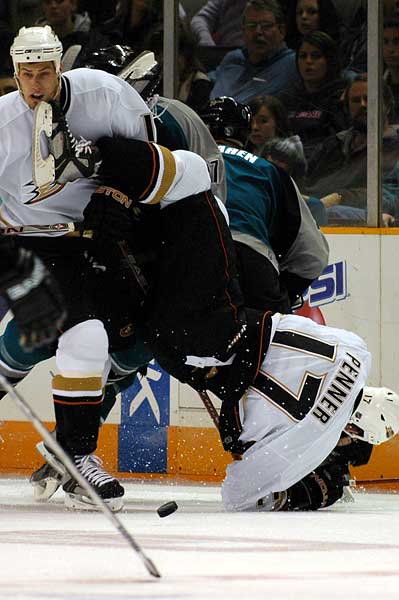
The Edmonton Oilers offered Dustin Penner a $21.25-million, five-year offer sheet and I want to hunt down Charles Wang and beat him over the head with a hockey stick.

The deal would pays Brown $4.25 million in each of the next five seasons ... that is ridiculous. This is Dustin Penner we are talking about ... he had 45 f-ing points last season. If this sort of thing continues, and I think it will, the league will be headed to a labor dispute again around the time of the 2012 Olympics. Teams cannot keep offering ludicrous contracts to mid-level talent. Edmonton already tried to pull this garbage on Buffalo for Thomas Vanek (and failed), resulting in another prematurely-deserved high money contract. But at least Vanek averaged a point per game this last season.

Don't think I am attacking this just because it is the Oilers; I think the deal the Rangers gave Scotty Gomez was stupid as well - too many years, too much money after a poor season. I do blame it all - of course - on the Islanders and the farce of a contract they handed to DP, thus the stick to the head of Wang comment.

Offer sheets themselves have always been troublesome - the Rangers helped speed the league towards chaos when they gave an offer sheet to Joe Sakic back in '97. But again, at least Sakic was a somebody who had proven his worth, not some kid who may turn out to be something someday.

Sooner or later the league will have to step in, if only because they will lose hold of the salary cap that they were so easily able to force upon the players. I don't want to have to spend another season driving two, three hours to watch UHL or AHL hockey.