Showing posts with label no excuse for stupidity. Show all posts

Tuesday, October 4, 2011

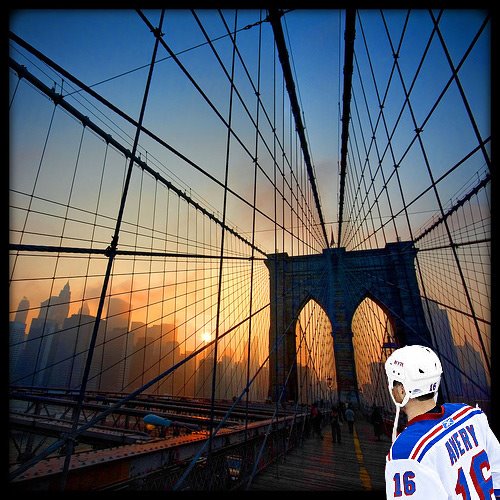
The Avery Era Is Over (for good this time)


I'm not sure what there is to say that I haven't already ranted on Twitter. John Tortorella always hated Sean Avery and, with Sather's summer signings, finally had the opportunity to get rid of him and he used it.

That simple.

The nonsense about Erik Christensen getting the job because of his versatility is just that, nonsense. Yes, Christy can play center and wing, but he can also lose the puck at the lightest touch and not play defense. And show up for two, maybe three games a season. And be a supremely smug jerk in interviews and to fans. And not be Sean Avery.

The writing has been on the wall since Torts was hired but it still is sad that this day has come to pass. The head coach of a team should do everything he can to make the team better, to make it win games - not to placate his own ego and carry out a personal vendetta.

I, an avowed Avery supporter who has gone to bat for him before, fully admit that he didn't perform up to par last season - I gave him a C- in my report card - but he was still a valuable player for the team.

As I wrote in my Facts of Life:
The Rangers were 12-4-1 when he registered a point. ... Torts never gave him the chance to gain any chemistry with his teammates, bouncing him around the lineup. And the super pest was stupefyingly scratched for several games down the stretch and once during the playoffs (Torts clearly not learning his lesson from 2009).
I truly hope that Sean is able to find another NHL job, just not in the Atlantic division. Perhaps there is a GM out there willing to look beyond the bad reputation and see a voracious forechecker, a guy who actually stands up for his teammates and a lightning fast skater. Off the ice he is also great for public relations as he is great with the fans and a charitable person.

Hopefully Avery can find someone who believes in his ability and puts him in a position to achieve, not someone who refuses to give him a fair shot. Best wishes to a good and loyal Blueshirt.


 The Avery Era Is Over (For Good This Time): Reflecting on a Controversial Career


In the world of professional hockey, few players have generated as much controversy, both on and off the ice, as Sean Avery. Known for his provocative behavior, outspoken nature, and a playing style that often tested the boundaries of sportsmanship, Avery's career was marked by highs and lows. This article delves into the unique journey of Sean Avery, exploring his impact on the game, his tumultuous relationship with the NHL, and what the future holds for one of hockey's most polarizing figures.

Table of Contents

The Early Years: A Glimpse into Sean Avery's Hockey Journey

Avery's Youth and Ascent to the NHL
The Beginnings of Controversy
Avery's NHL Career: Highs, Lows, and Memorable Moments

Avery's Stints with Multiple Teams
On-Ice Contributions and Infamous Incidents
The NHL's Relationship with Avery: Suspension and Redemption

Avery's Suspension and League Reconciliation
Playing in the AHL and Overseas
Life After Hockey: Avery's Transition to Post-Retirement

Exploring Avery's Post-Hockey Ventures
A New Chapter: Personal Growth and Reflection
FAQs: Common Questions About Sean Avery

1. The Early Years: A Glimpse into Sean Avery's Hockey Journey

Avery's Youth and Ascent to the NHL

Sean Avery's hockey journey began in the rinks of Ontario, Canada. His passion for the game led him through the minor leagues and into the NHL. Avery's tenacity and gritty playing style earned him a place in the world's top hockey league.

The Beginnings of Controversy

Even in his early years, Avery displayed a penchant for controversy. His willingness to engage in trash talk, agitate opponents, and take unconventional actions on and off the ice set the stage for the polarizing figure he would become.

2. Avery's NHL Career: Highs, Lows, and Memorable Moments

Avery's Stints with Multiple Teams

Throughout his NHL career, Avery played for several teams, including the Detroit Red Wings, Los Angeles Kings, Dallas Stars, and New York Rangers. Each stop brought its own set of challenges and opportunities.

On-Ice Contributions and Infamous Incidents

Avery's contributions on the ice were undeniable. He brought energy, intensity, and a level of pestering play that could disrupt opponents. However, his career was also marked by controversial incidents, including his infamous "sloppy seconds" comment and multiple suspensions.

3. The NHL's Relationship with Avery: Suspension and Redemption

Avery's Suspension and League Reconciliation

Avery's provocative behavior eventually led to a significant suspension by the NHL. However, he would later reconcile with the league, paving the way for a return to professional hockey.

Playing in the AHL and Overseas

Following his time in the NHL, Avery continued to play hockey in various leagues, including the AHL and European leagues. These experiences offered him a chance to continue his career while adjusting to a different style of play.

4. Life After Hockey: Avery's Transition to Post-Retirement

Exploring Avery's Post-Hockey Ventures

After officially retiring from professional hockey, Sean Avery explored various avenues outside of the game. He delved into the world of fashion, pursued acting opportunities, and became an outspoken advocate on social and political issues.

A New Chapter: Personal Growth and Reflection

In recent years, Avery has shown signs of personal growth and reflection. His views and perspectives have evolved, and he has used his platform to address important topics, such as mental health and LGBTQ+ rights.

5. FAQs: Common Questions About Sean Avery

Q1: What was Sean Avery's playing style known for?

A1: Sean Avery was known for his gritty, agitating playing style that often tested the boundaries of sportsmanship. He was a pest on the ice, engaging in trash talk and trying to disrupt opponents.

Q2: What was the "sloppy seconds" incident involving Sean Avery?

A2: The "sloppy seconds" incident was a controversial comment made by Avery in reference to his ex-girlfriend's relationships with other NHL players. It resulted in a significant suspension and drew widespread criticism.

Q3: What is Sean Avery's current involvement in the hockey world?

A3: Sean Avery is not actively playing professional hockey but remains connected to the sport through media appearances, podcasts, and social media commentary.


The career of Sean Avery is one that will be forever etched in the annals of hockey history. From his early days as a tenacious player with a knack for controversy to his post-retirement endeavors as a fashion aficionado and advocate, Avery has left an indelible mark on the hockey world. As he continues to evolve and grow, his legacy serves as a reminder of the complexities and passions that define the sport of hockey. Whether you view him as a provocateur or a multifaceted individual, Sean Avery's presence in the hockey world remains undeniable.


Monday, July 6, 2009

Bashing Brash, Day 1


Glen Sather was right, there will be cheers for Donald Brashear at MSG. Given the price increase at MSG, more and more of the diehard, knowledgeable hockey fans have been pushed out. This is not to say that there aren't some puckheads who will root for Brash - you see Redden and Poti jerseys out there, so there are misguided members of the faithful - but the vast majority will not get behind a player with Brashear's history. The cheers will come, however, from the few corporate clients that come - they don't know the game, they don't care about the game, they just want to see a little violence.

And Donald Brashear will certainly provide that. Brashear is a vicious fighter who throws punches with little-to-no regard for personal safety. When Colton Orr would just start launching punches, you knew he was in trouble. He was a more surgical striker who used his size and leverage to work in his defense while he picked his spot for the big blasts. Whether in tight or at arms length, Brash just rears back and throws. I want to trash Brash for it, but let's face it - it has worked for him. He will hit the 1,000 game mark this season, no small feat for a brawler.

The question is how much fighting will he actually do? According to Hockeyfights.com, the past-his-prime brawler had just 11 fights last season and has not had more than 15 in a season since 2002. Just how prolific can he be? Glen can claim that Brashear will fit in Tortorella's system well but Brash scored double digits in goals just once in his career, back in 2000. So since he isn't about to score, what will he contribute to the system? A forecheck of high elbows, slashes and cross checks?

Aside from the outright bitch-slap to the faces of the True Blue and every player in the locker room, the decision to sign Brashear is a slap in the face of the sport. He blatantly ignores the Code on the ice but teams keep picking him up because of the success of all-out-warfare fighting style. It has gotten him suspended time after time from the NHL and even suspended for a dozen games in a league based around fighting! At the time brash put it back on the league, saying that everyone there was picking on him, trying to make a name for themselves.

I'm sorry, there is no excuse for breaking the Code. It is Brashear's readiness to denigrate our sport with his barbarity that I loathe him and won't be among those cheering when he steps out on the ice in a Blueshirt this fall or any other time.

So, each day this week, I am going to post a YouTube of the animal in action. Today's fine feature will be the Quebec senior league incident that caused the aforementioned 12 game suspension:

And Glen Sather signed this guy.


 "Bashing Brash, Day 1: The Complex Career of Donald Brashear"


Donald Brashear, a name that often elicits strong reactions from hockey fans and players alike. In this article, we embark on a journey to explore the complex career of Donald Brashear, a man who played the role of both enforcer and skilled player during his time in the NHL. We'll delve into his background, playing style, notable moments, and controversies. Additionally, we'll address frequently asked questions (FAQs) to provide a comprehensive view of this polarizing figure in hockey history.

Section 1: The Early Days

1. From Quebec to the NHL

Donald Brashear was born on January 7, 1972, in Bedford, Indiana, but grew up in Val-Bélair, Quebec. We explore his early life and the path that led him to the National Hockey League.

2. The Enforcer Emerges

Brashear's reputation as an enforcer began to take shape during his junior hockey days. We examine the pivotal moments that shaped his identity as a tough player on the ice.

Section 2: Brashear's Style of Play

1. The Enforcer's Role

In a league known for its physicality, Brashear embraced the role of the enforcer. We discuss the responsibilities and challenges that came with being a protector of teammates.

2. Surprising Skills

While often associated with fighting, Brashear possessed surprising hockey skills. We explore his ability to contribute offensively and his versatility as a player.

Section 3: Notable Moments

1. Memorable Fights

Brashear engaged in numerous memorable fights during his career, squaring off against some of the NHL's toughest enforcers. We revisit some of these iconic battles.

2. Unexpected Goals

Despite his role as an enforcer, Brashear occasionally found the back of the net in surprising fashion. We highlight some of his most unexpected goals.

Section 4: Controversies and Incidents

1. On-Ice Incidents

Brashear's career was not without controversy. We delve into some of the on-ice incidents and altercations that made headlines during his time in the NHL.

2. The Marty McSorley Incident

One of the most infamous incidents involving Brashear was the Marty McSorley stick-swinging incident. We explore the aftermath of this controversial event.

Section 5: Impact on the Sport

1. The Role of Enforcers

Brashear's career coincided with a period of debate about the role of enforcers in the NHL. We discuss the evolving perspectives on fighting in hockey.

2. Brashear's Legacy

Beyond the controversies and fights, Brashear's legacy includes his post-retirement endeavors, such as coaching and his contributions to the hockey community.

Section 6: FAQs About Donald Brashear

1. How many fights did Donald Brashear engage in during his NHL career?

Brashear participated in over 200 fights during his NHL career, establishing himself as one of the league's most prominent enforcers.

2. Did Donald Brashear ever win any championships during his NHL career?

While Brashear did not win a Stanley Cup during his career, he did reach the Stanley Cup Finals with the Vancouver Canucks in the 1993-1994 season.

3. What were some of the most memorable fights involving Donald Brashear?

Some of the most memorable fights involving Brashear include his battles with Bob Probert, Georges Laraque, and Tie Domi, among others.


Donald Brashear's career in the NHL was marked by physicality, versatility, and controversy. As an enforcer, he played a vital role in protecting his teammates, but he also possessed surprising hockey skills that often went unnoticed. His legacy is a complex one, with debates about the role of enforcers in hockey continuing to this day. This article serves as the first chapter in our exploration of Brashear's career, shedding light on the man behind the enforcer's role and setting the stage for a deeper dive into his impact on the sport of hockey.


Saturday, April 25, 2009

R1, G5: Coach's Ego Costs Rangers


Siegfried & Roy knew that when they could no longer work with the tiger, it was time to call it quits. No one wants to pay to watch two dorks not be funny. John Tortorella put his head in the tiger's mouth, got bitten and got rid of the tiger. Big mistake, and there was nothing funny about ensuing show, a 4-0 loss to the Caps.

Benching Sean Avery for Game 5 lost the game for the Rangers before the puck was even dropped. Tortorella wanted to send a message and he did - his ego is bigger than his desire to win. Everyone has seen the Rangers record with and without Avery in the lineup; you don't have to be Stephen Hawking (get well soon) to figure out that when the team really needs to win a game, Avery should be in the lineup. He wasn't, and they didn't.

Say what you want about Avery's reoccurring antics: they are reckless, they sometimes injure other players and they put the Rangers at a disadvantage. Quick quiz - how many times has Avery taken a penalty as a Ranger and had it directly cost the team a game? The answer? Zero. In the eight games that the Blueshirts lost since getting Avery back, he took penalties in six of them. And not once did the opposing teams score on the ensuing power play. There were two occasions when the game was tied (one was when he fought Tyler Kennedy) and just once were the Rangers clinging to a lead (against Atlanta on March 26th). In the other losses he may have not helped get the team back in the game but it is undeniable that Avery's indiscretions have yet to directly cost the team a victory.

Sadly the same can't be said for Captain Queeg Tortorella.

Tortorella wants to preach accountability and yet Markus Naslund didn't sit in the skybox for a second after his parade to the penalty box in Game 1. Chris Drury took a bad penalty in Game 3 and the Caps scored on the ensuing power play to essentially kill the Ranger chances and he wasn't benched. Both Scott Gomez and Tortorella himself took penalties to put the Rangers on their heels in the opening minutes and you can be sure both will be back for Game 6. (That is, unless Torts gets suspended for winging a waterbottle into the crowd, but I still haven't seen a good angle of that incident.)

The man preaches discipline, discipline, discipline but I'm not really sure if he knows what it means. It isn't the ability to restrain oneself from taking penalties. In hockey it is the combination of hockey smarts, talent and effort to not place oneself in the position where the referee can call an infraction. Beat the guy to the puck, you don't need to hook or grab him as he goes by. Be responsible with your stick, you won't slash, high stick or trip the guy. Position yourself better, you don't have to crosscheck him. Angle your checks properly and you won't board him.

Sadly on Friday the Rangers showed little of the hockey smarts, talent and effort needed to win and they didn't.

*Even when the Rangers were given a gift, they blew it. How Ryan Callahan didn't get a matching penalty with Erskine at the end of the second period is beyond me. But the Rangers got a power play and did ... absolutely nothing. So typical.

*All season long all I have asked from the maligned unit is to not give up a short handed goal. To the best of my memory, since Avery returned they hadn't. No Avery and Matt freakin' Bradley scores. Coincidence? Perhaps. But it's terrible any way you cut it.

*And the worst part of that goal was not that Rozy fell or shootout specialist Hank gave up a breakaway goal but that Drury game up on the puck, allowing Bradley to blow past him. He made a half-heated chop at it instead of skating through and taking possession or, frankly, hitting it with any kind of oomph. And watching him miss the check on Ovechkin's goal was pathetic. You can only hope that he really is indeed playing severely hurt because otherwise there is no excuse for the captain to be so clumsy.

*Everyone is drooling over that Ovechkin goal and it was kinda pretty but c'mon, how do you celebrate that? As I said over at Japer's Rink, look at who he beat on the way: Zherdev, Morris and Voros. When you think about how good Ovechkin is, that is like you or me skating though a bunch of handicapped children. Would you jump around? Wooo!!! In your face!!! Yippeeeeee! I didn't think so.

*Speaking of the challenged, Joe Micheletti made his best observation to date - pointing out where Alex Semin was positioned on the face off that he scored off of. Of course, Joe neglected to point out that Hank's angle was off and he was already on his knees as the puck hit the top of the post but let's face it, it was a helluva shot.

*Hank allowed his first soft goal of the series, the bad-angle shot that made it 2-0. Like I said before, you can also hang him a little for the first goal but there was no way he was stopping either of the goals by the Alexes.

*He wouldn't of had to try on the Ovechkin goal if the officiating blew the whistle when they should have. You can clearly see Sergei Fedorov kick out Zherdev's leg on the replay. Z tumbled and Fedorov kicked the puck to OV. I mean, it isn't like Zherdev wasn't going to actually do anything with the puck, but a penalty is a penalty and the slew foot clearly was a penalty.

*As MSG showed, Blair Betts did kick the puck back to Semin on the third goal but that was just bad luck. All Bettsy did with Dubi, Sjoey and Cally was get the Washington power play to go 0-7. And a ton of credit has to go to Staalsie and Girardi, were on for around seven minutes of kill time. That is insane. And in a game where the opponent scored four goals, they were the only defensive pairing not to have a goal scored against while on the ice.

*Interesting timing for Colton Orr to finally get angry - 14:14 of the third period. It was just outside of that dreaded last-five-minute-sending-a-message time. It was also way too little, way too late but that likely goes back to the incompetent coaching.

*At this point all you can hope for is that Torts hasn't blown the series. He surely sent the wrong message to Sean - he benched him and the team lost. Sam Rosen even said at the 13 minute mark of the second period that 'the Rangers sure need a spark' or something to that effect. But perhaps Avery will show he is the better man and come out like gangbusters on Sunday. If not, the Rangers are finished.

*PHW Three Stars
3-Simeon Varlamov - 20 saves.
2-Alexander Ovechkin - one goal.
1-Matt Bradley - two goals.

Scotty Hockey Three Stars
3-Girardi/Staal - These kids are getting better and better. Too bad the coach won't give them a chance on the power play because they surely can excel there as well.
2-Bradley - Even as an opposing fan, you have to love when guys like this score. hard work pays off kids.
1-Tortorella - His personnel selection, both in his roster and on his power play - gave Washington the win as much as anything the Caps actually did themselves.


 R1, G5: Coach's Ego Costs Rangers


In the world of sports, especially in the high-stakes arena of professional hockey, decisions made by coaches can have a profound impact on a team's success or failure. Such decisions can be the result of careful strategy, gut feelings, or sometimes, ego. In this article, we'll explore a pivotal moment in the NHL playoffs, specifically in the context of Round 1, Game 5, where a coach's ego arguably played a significant role in the New York Rangers' outcome. We'll delve into the details, the repercussions, and address some frequently asked questions (FAQs) related to coaching decisions in professional hockey.

The Setting: Round 1, Game 5

Before we dissect the events of that fateful game, let's set the stage. The New York Rangers were facing off against a formidable opponent in the first round of the playoffs. The series was tied, and Game 5 was critical for momentum and ultimately advancing in the postseason.

The Decision: Coach's Ego on Display

In a pivotal moment during the game, the Rangers were leading, and the coach faced a critical decision. It was the third period, and the opposing team was mounting a comeback. The coach had a star player who had been a significant contributor throughout the season. However, during this game, the player was struggling, both defensively and offensively.

Instead of making the prudent choice of reducing the struggling player's ice time or even benching him temporarily to regroup, the coach's ego got in the way. He decided to keep playing the star player, hoping that he would "break out" of his slump and prove the naysayers wrong.

The Consequences: Momentum Shift and Loss

As the game unfolded, it became evident that the struggling star player was not improving his performance. In fact, his mistakes on the ice began to cost the team. The opposing team seized the opportunity, capitalized on the errors, and ultimately won the game. What had been a promising lead for the Rangers turned into a heartbreaking loss.

The Fallout: Fan and Media Backlash

The aftermath of the game was swift and brutal. Fans were frustrated and confused about the coach's decision to keep the struggling star player on the ice. Social media erupted with criticism, and sports talk shows were filled with passionate debates about the coach's ego-driven choice.

The media coverage was relentless. Pundits dissected the decision from every angle, questioning the coach's judgment and suggesting alternative strategies that could have been employed to secure the win. It was clear that the coach's ego had overshadowed his ability to make rational, team-first decisions.

Frequently Asked Questions (FAQs)

Why would a coach let their ego influence their decisions?
Coaches are human, and like anyone else, they can be influenced by their ego. In high-pressure situations, they may want to prove themselves right or demonstrate their loyalty to star players, even when it's not in the team's best interest.

How can a coach balance ego and strategy?
A successful coach must strike a balance between confidence in their decisions and a willingness to adapt when necessary. It's essential to prioritize the team's success over personal pride.

What other factors can influence coaching decisions in the NHL playoffs?
Coaches must consider various factors, including player fatigue, injuries, and opponent strategies. Playoff hockey often involves quick thinking and adaptation to changing circumstances.

Can a single coaching decision cost a team a series?
While one decision can be pivotal, it's essential to remember that a series consists of multiple games. A single mistake can contribute to a loss, but it's rarely the sole determining factor.

How do coaches learn from their mistakes?
Good coaches use their mistakes as learning opportunities. They review game tapes, seek feedback from their staff and players, and adjust their strategies and decision-making for future games.


In the world of professional sports, where the margin between victory and defeat can be razor-thin, every decision made by coaches carries immense weight. The case of Round 1, Game 5, serves as a stark reminder of how a coach's ego can cloud their judgment and impact a team's fortunes.

While fans and pundits may criticize coaching decisions in the heat of the moment, it's essential to recognize that coaches are under immense pressure, and their decisions are often made with the best intentions. However, lessons can be learned from moments like these, emphasizing the importance of humility and a team-first mentality in coaching at the highest level of professional hockey. As the playoffs continue, fans and analysts will be watching closely to see how coaches navigate the fine line between ego and strategy in pursuit of the coveted Stanley Cup.


Monday, January 5, 2009

Renney = FAIL

According to Sam Weinman, Tom Renney has scratched Lauri Korpikoski for tonight's game and is dressing Aaron Voros in his place.
“Getting Voros back in, getting his game back into the lineup, and his presence at the net to help our power play,” Renney said when explaining his rationale.

To help the power play? The power play that Voros was incapable of helping prior to his benching? The power play that Voros scored one goal on in his last 33 games?
Renney went on to acknowledge that Voros, who has been a scratch the past two games in part because of a drop-off in his fitness level, has worked his way back into shape; and that the move tonight was an effort to reward that.

So Renney will reward players who work out off the ice but he won't punish the ones who don't work on it ...


 Examining Tom Renney's Tenure with the New York Rangers: Successes and Failures


Coaching in the NHL is a demanding and challenging profession. Over the years, the New York Rangers have seen various coaches come and go, each with their own unique impact on the team's performance. In this article, we'll take a closer look at Tom Renney's tenure as the head coach of the Rangers, discussing both the successes and failures during his time in New York.

I. The Tom Renney Era Begins

Hiring Tom Renney: Tom Renney was named the head coach of the New York Rangers in 2004, taking over a team that had struggled in the previous seasons.

Steadying the Ship: Renney's early years with the Rangers were marked by stability and a focus on defensive play. He helped the team become more competitive and disciplined.

II. Successes Under Tom Renney

2005-2006 Season: In his first full season as head coach, Renney guided the Rangers to the playoffs after a seven-year absence. The team showed significant improvement in their defensive play.

Development of Young Talent: Renney played a key role in the development of young players like Henrik Lundqvist and Ryan Callahan, who would become cornerstones of the franchise.

Playoff Appearances: Under Renney, the Rangers made the playoffs three consecutive years from 2005 to 2008, including a trip to the Eastern Conference Finals in 2008.

III. Failures and Criticisms

Offensive Struggles: One of the criticisms of Renney's coaching was the team's often anemic offense. The Rangers struggled to score goals consistently during his tenure.

Lack of Stanley Cup Success: Despite making the playoffs, Renney's Rangers were unable to capture the Stanley Cup, falling short of the ultimate goal.

Inconsistent Play: The team's play could be inconsistent under Renney, with periods of strong defensive play followed by offensive droughts.

IV. The Torts Era

John Tortorella's Arrival: Tom Renney was replaced by John Tortorella during the 2008-2009 season, signaling the end of his tenure as head coach.

Tortorella's Different Approach: Tortorella brought a more aggressive and offensive style of play to the Rangers, which had its own set of challenges and successes.

V. Renney's Legacy

Contributions to Development: Tom Renney's time with the Rangers played a vital role in the development of key players and the overall culture of the team.

Mixed Legacy: Renney's legacy is a mix of successes and criticisms, reflecting the complexities of coaching in the NHL.

FAQs about Tom Renney's Time with the Rangers

Q1: Did Tom Renney win a Stanley Cup with the Rangers?

A1: No, Tom Renney did not win a Stanley Cup with the Rangers. Despite making the playoffs during his tenure, the team did not capture the championship.

Q2: Who succeeded Tom Renney as the Rangers' head coach?

A2: John Tortorella succeeded Tom Renney as the head coach of the New York Rangers during the 2008-2009 season.

Q3: What impact did Tom Renney have on the development of Rangers players?

A3: Tom Renney played a significant role in the development of young talent like Henrik Lundqvist and Ryan Callahan, who went on to become key players for the Rangers.


Tom Renney's tenure as the head coach of the New York Rangers was marked by both successes and criticisms. While he brought stability and defensive discipline to the team, the Rangers fell short of winning the Stanley Cup during his time. His legacy is a testament to the challenges and complexities of coaching in the NHL, where success is measured not only in championships but also in the development of players and the growth of the team's culture.